Click image to visit:


 Migrante organizations in Canada join migrants around the world in celebrating International Migrants’ Day and renewing our commitment to struggle for the rights and welfare of all migrants. As the Canadian state grapples with its own economic and political crises, migrants along with the Canadian working people persevere in their resistance to attacks on their rights.
 by Steve da Silva – Reporting from Detroit
 Omar Regan, a son of Imam Luqman Ameen Abdullah, greets friends
 A rally was held outside the federal building on November 5, 2009
 Mujahid Carswell (right) and brother Jamil, sons of the assassinated Imam Luqman Ameen Abdullah, rapping at ‘Mu Today, You Tomorrow’ Benefit Concert.
 Join us to celebrate and support one of the few people's newspapers in Toronto - BASICS Free Community Newsletter: http://basicsnewsletter.


 all of whom you can find at

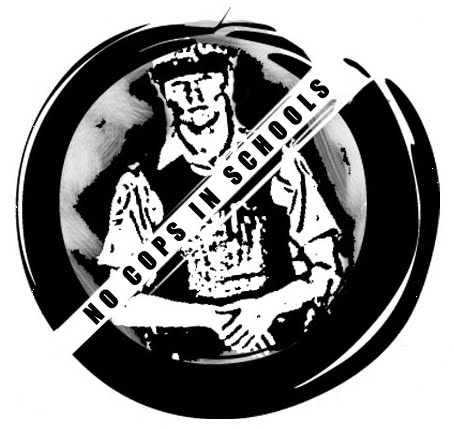
Toronto Police Services’ own report on the School Resource Officer program shows that the program has had no positive impact toward any of its claimed goals.
Toronto – November 25, 2009: The Neighbourhood Organized Coalition Opposed to Police in Schools (NOCOPS) questions whether the Toronto Police Services (TPS) misinterpreted or misrepresented the data from the 2008/2009 School Resource Officer (SRO)Program Evaluation Report. NOCOPS is a coalition of concerned parents, students, teachers and community members who have been monitoring the SRO program since its implementation in September, 2007
“If this report had been written by a student, it would definitely not pass as it draws conclusions contrary to its own data” said NOCOPS member and teacher James Campbell.
The Evaluation Report was released to the public on November 18, 2009 with claims that the data suggests the SRO program has been “beneficial to crime prevention, crime reporting and relationship building in schools and surrounding neighbourhoods.”
Yet an unbiased review of the data reveals that the report has had zero impact on student perception of safety and zero impact on student willingness to report crimes.
To quote from the report itself, “overall student perception of safety in their school and in the neighbourhood surrounding the school did not improve”. In fact, there was no increase in feelings that the SRO made the school safer even for students who had talked to the SRO informally or about a problem they were having. Perhaps of greatest concern is that the report confirms that many students feel less safe with SROs in the schools, as those students “who thought [the program] was a bad idea were more likely to say they did not feel safe (18%)”.
The data also shows that overall the presence of an SRO did not change students’ willingness to report being a victim or a witness to a crime.
The report also provides no credible data that the SRO program made any impact on reducing crime in or around school grounds. For this part of the report the TPS compared total number of offences and victimization from the 2007-2008 school year and the 2008-2009 school year – both on school grounds and within 200 meters of school grounds over all times of the day and concluded that “offences and victimization generally decreased in 2008/2009 compared to the previous school year”.
However, there were serious reliability problems with different aspects of how this crime data was analyzed. The study did not use any control (that is, collecting and comparing similar crime data from schools that did not have an SRO) or factor in overall reduction in crime statistics in the 2008/2009 school year compared to the 2007/2008 school year.
In addition, some of the data for this portion of the study was too small to have any statistical relevance. For example, data for incidence of victimization on school grounds during school hours compared only 2 incidents in 2007/2008 to zero incidents in 2008/2009 in a single school, generating an impressive (but statistically meaningless) 100% decrease in victimization.
Further, when comparing crime in SRO schools at the beginning of the program and at the end of the program, the report says that “When the geographical area for reported victimizations was expanded to 200 meters around the school, however, there were fewer victims over all hours and outside of school hours, but there were more victims during school hours.”[Emphasis added] The data suggests that the presence of SROs inside these schools has only served to displace victimization incidents off of school property.
NOCOPS community member Alok Premjee emphasized that “The survey methodology for the evaluation is seriously suspect and would not come close to meeting the basic requirements of any government funded program analysis, let alone be considered adequate justification for a program that costs over 5 million dollars per year to run. Among other things, there was no opportunity for students to respond if they had been negatively impacted by the SRO. The troubling arrest of a student at Northern Secondary is only one highly publicized event among numerous incidences we have documented where students have felt violated or targeted by the SRO at their school”.
The TPS misrepresentation of the results from this study is no surprise since the TPS not only initiated the program, but also developed the surveys, analyzed the data and wrote the report. There has been no independent evaluation with absolutely zero independent input anywhere. Even the most highly touted piece of data (suggesting an 11% increase in the proportion of students who felt the relationship between police and students was good or excellent) is inconsequential since the proportion of students who felt the relationship was poor or fair showed no significant change. Essentially, students who already felt comfortable with the police and liked the program and students who did not feel comfortable with the police and felt the SRO program was a bad idea felt exactly the same way a year later.
As stated by NOCOPS member and parent Niraj Joshi “it is particularly troubling that the TPS is using the study to recommend additional investment of precious funds and institutional resources in this failed program. We should not be wasting taxpayer money on the universally unproven and yet costly experiment of the SRO program. Instead, the TDSB and the province must allocate these provincial funds toward immediately implementing the recommendations put forward from two independent community consultations (the Falconer Report on School Safety and the Curling-McMurtry Report on the Roots of Youth Violence) for both engaging youth and making our schools safer”.
For More Information Contact:
Alok Premjee
647-887-7857
 Patrick Mac Manus
Rebellion (Denmark)
1. City courts, district courts or the Supreme Court cannot decide the right to rebellion.
This is also a principle viewpoint in the trial against Rebellion (Denmark) on December 3 and 7, January 8 and 15, 2010 in Copenhagen. Judgement will fall on February 8. Rebellion (Denmark) is accused of the transferral of financial support to Popular Front for the Liberation of Palestine (PFLP) and the Revolutionary Armed Forces of Colombia (FARC).
2. History has been driven by peoples’ resistance and change throughout the centuries on all our continents. All change has been created through conflict, from the times of slavery to our own days.
3. The American Declaration of Independence was written by insurgents against British colonial power in 1776, a declaration of “unalienable rights”—among these the rights “to Life, Liberty, and the Pursuit of Happiness”. And the right to resistance against every regime that violates these rights: “whenever any Form of Government becomes destructive of these Ends, it is the Right of the People to alter or to abolish it…”
The Universal Declaration of Human Rights, adopted after World War 11, accentuates: ”Whereas it is essential, if man is not to be compelled to have recourse, as a last resort, to rebellion against tyranny and oppression, that human rights should be protected by the rule of law.”
These are declarations created through a hard-won history, which Rebellion (Denmark) determinedly will defend.
4. This is a history that continues. The anti-colonialism armed struggles of the 1960s and 70s created the desire to recognise liberation movements’ rights to fight for independence.
The supplemental protocol of the Geneva Convention, in 1977, legalizes “armed conflicts” when people are “fighting against colonial domination and alien occupation and against racist regimes in the exercise of their right of self-determination”.
5. The Geneva Convention’s humanitarian International Law regulates conduct when armed struggle occurs — not ‘terrorist legislation’.
In Palestine, resistance against Israeli occupation is conditioned by the 1977 Geneva Convention supplement. Organized resistance groups, such as the Popular Front for the Liberation of Palestine (PFLP), can lawfully conduct armed struggle against an occupying force.
In Colombia, an internal armed conflict continues between the Revolutionary Armed Forces of Colombia (FARC) and the Colombian government. This is also subject to the Geneva Convention, especially due to FARC’s maintenance of significant geographical control in Colombia.
International Law also contains a prohibition against terrorism but defines this more narrowly than ‘terrorist legislation’. The humanitarian International Law considers not each and every civilian death a terrorist action. Civilian losses are considered as an often unavoidable result in connection with attacks upon legal military objectives.
6. This reality is disputed by ‘terrorist legislation’, a law passed by the Danish parliament in June 2002 amidst the “panic” arising from the attack upon New York’s twin towers.
Democratic rights are increasingly viewed as hindrances to combat ‘terrorism’. Legitimate resistance forms are stamped as terrorist. In the name of the “global war against terror”, oppressive states seek to attire themselves with new international legitimacy. In many countries, state terrorism is the most pressing and fatal threat against the population’s life and welfare.
’Terrorist legislation’ makes it punishable to support domestic or foreign organisations, either materially or by other means, if they are stamped as “terrorist”. Classification of organisations as ‘terrorist’ is characterised by arbitrariness, especially through the secret and uncritical cooperation between intelligence and counter-intelligence services.
Rebellion (Denmark) challenges the political paradigm, upon which the so-called ‘global war against terror’ is founded. It ostracises social and political movements from international political dialogue, a dialogue that is a premise for a political solution to those conflicts, which movements are a part of.
7. A repeal of terror legislation will result in returning to history’s reality. Peoples’ rebellion is an historic fact and in certain circumstances a necessity, a necessity that occurs when all other action forms are suppressed and inaccessible. Public support to such movements is denied in current legislation perspective and affected by prosecution.
8. The essentiality of resistance is not limited to the “distant world”. It applies to Europe, to the European Union. Climate change is increasingly decisive to history and conflict. The wave of refugees and forced immigration is rising day by day.
The creation of a “European fortress” rises as a reaction against change. A neo-fascistic dimension marches forth in many countries. In fascism’s time reaction was too divided and too late.
9. Civil disobedience is an increasing necessity. Through it the world will also create new attempts to define human life and its future, including ‘nature’s rights’: an acknowledgement of humans’ necessary dependence and responsibility here on earth.
Translated from the Danish by Ron Ridenour. Publisher: Antifacistisk Forum - Kulturpolitisk Tidsskrift. Oktober Kvartal 2009, nr. 5.
Rebellion (Denmark) : www.opror.net
 Editor's Note: The following statement is from Rebellion-Denmark. Rebellion's spokesperson Patrick Mac Manus is facing charges under EU terrorist legislation because of the organization's material support to liberation movements in Colombia and Palestine. Patrick Mac Manus was interviewed on Radio Basics on November 29, 2009 to talk about his case and why all people's have the right to struggle for liberation.
Rebellion (Denmark): The Court Case is Approaching!
The court case against Rebellion (Denmark) for support to resistance movements is now approaching. The demand is imprisonment. The court case takes place at Copenhagen City 6. Court, December 3 and December 7, 2009 and January 8, January 15, 2010. The judgement will be announced on February 8, 2010.
The aim of Rebellion (Denmark), formed in 2004, is to challenge ‘terrorist legislation’, both in Denmark and internationally.
Terrorist legislation seeks to undermine progressive organisations, resistance movements, trade unions and solidarity movements throughout the world.
We appeal for support from all movements to:
- Defend the right of peoples to resist illegitimate government and foreign occupation!
- Defend the right of peoples to take up arms against oppression where all other means have been exhausted!
Rebellion (Denmark) is accused of the transferral of substantial funds to Popular Front for the Liberation of Palestine (PFLP) and Fuerzas Armadas Revolucionarias de Colombia (FARC) as a challenge to terrorist legislation.
The Popular Front for the Liberation of Palestine (PFLP) has for decades been a leader of the struggle of the Palestinian people, engaged in legitimate conflict with occupation forces. We support the Popular Front for the Liberation of Palestine (PFLP) in its struggle for a secular and democratic state for all. It can in no way be defined as a ‘terrorist organisation’.
FARC (Fuerzas Armadas Revolucionarias de Colombia) has for decades worked and fought for the democratic rights and the equality of the people. The present regime has with US support and in alliance with ‘death squads’, controlled by landowners and drug cartels, continues to persecute the leaders and members of trade unions, political activists, students and peasant organisations of Colombia. Several Latin American nations have negotiated peace by legalising insurgency groups, allowing them to participate in an open political process. The criminalization of FARC is preventing a political solution in Columbia.
In Denmark, there is an increasing challenge to ‘terrorist legislation’, a growing defiance that Rebellion (Denmark) has striven to create and is itself a part of.
Close to us, the organisation Fighters + Lovers has challenged ‘terrorist’ legislation by selling T-shirts in support of FARC and PFLP. On September 18, 2008 the High Court overturned the non-guilty verdict of the Copenhagen City Court, sentencing five members to between 60 days and six months imprisonment. In March 2009 the Supreme Court revised imprisonment to conditional sentences, also expressing some doubt on the legislation itself.
Palestine and Colombia are the focus we have chosen. From Turkey to Kurdistan, from the Basque Country to the Philippines, there are many others who also could have been chosen. An important criterion for our choice is that liberation forces advance secular, democratic, and humanist goals together with their people.
Through present terrorist legislation, states have attempted to curb the freedom of expression and the political rights of their citizens. The right to extend moral and material support to resistance and liberation movements throughout the world is threatened. The civil and labour rights of citizens to wage legitimate struggles for welfare and democratic reform are also increasingly being curbed.
Rebellion (Denmark) appeals to all movements for democracy and international solidarity to join us in challenging national and supranational terrorist legislation and the so-called ‘global war on terror’.
Demonstrations at Danish Embassies demanding the acquittal of Rebellion (Denmark) in the coming court case would be welcome, as would letters of protest directed to the Ministry of Justice and the Ministry of Foreign Affairs.
Ministry of Justice:
Slotsholmsgade 10
1216 Copenhagen K
Telefon: +45 / 72 26 84 00
Telefax +45 / 33 93 35 10
Email: jm@jm.dk
Ministry of Foreign Affairs:
Asiatisk Plads 2
DK-1448 Copenhagen K
Telefon: +45/ 33 92 00 00
Telefax: +45/ 32 54 05 33
E-mail: um@um.dk
Please send all information on activities – we need your support!
Rebellion (Denmark): opror@linuxmail.org
 A War of Conquest Against the Afghan People
 BASICS #16 (Nov/Dec 2009)
 Hundreds participate in walk-out after student arrested at No
  Protesting students at Northern agree with Premjee, one of them holding up a sign stating, “This school is not a police state.” “This is very much a grassroots movement; students are outraged and our questions are not being answered,” said Max Naylor, a grade eleven student and one of the organizers of the protest. Safety concerns at the school have been dealt with by installing cameras and requiring all members of the school community to wear lanyards with identification cards, as well as by hiring hall monitors, thus calling into question the need for police officers. “The main issue is that students feel uncomfortable with an armed officer in the school. It makes us feel like the school belongs not to students but to the police,” he said.
 Morolee Miller and her son, 18-year-old Brandon Miller, were both the victims of a brutal raid on their home by Toronto Police of 31 Divsion which yielded nothing but terror and a ransacked home.
 The “Peace” President Obama’s Indiscriminate Bombing of Pakistan
 BASICS #16 (Nov / Dec 2009)
 Leading members of the Unified Communist Party Maoist march with the people during the torch rally of November 1, the first of a series of mass actions planned for the next two weeks. The Maoists are rallying the people to bring down the current government of Nepal.

.jpg)


 Posts
All Comments
Posts
All Comments