Thursday, November 05, 2009

The War In Afghanistan

A War of Conquest Against the Afghan People

BASICS #16 (Nov/Dec 2009)
by Steve da Silva

While the debate was playing out this past October in the American media about the planned “surge” of as many as 45,000 more American troops into Afghanistan, reports were surfacing that certain NATO members – namely, Canada, Italy, and Germany – were paying off Taleban elements in exchange for peace in the areas that they patrol.

For his part, Afghan President Hamid Karzai has said that he would reach out to the Taleban if they would agree to respect the Afghan constitution, which is double-speak for respect the occupation.

As the occupiers prepare for a massive escalation of the war, the attempts at reconciliation with certain Taleban elements once again demolishes the propagated myth that fighting the Taleban is the main object of the NATO occupation. The strategy of reaching out to so-called “moderates” is intended to isolate those elements dead-set fighting the occupation – a demand supported by a growing proportion of the Afghan population.

As the Commander of the Canadian Forces in Afghanistan, Lt. Col. Joe Paul recently said, “It’s not true that all of those people shooting at us are insurgents.” That might have something to do with the fact that not everyone NATO is shooting at are “insurgents.”

Over 1600 Afghan civilians were killed between January and August 2009 alone. On September 5, a joint American-German aerial bombing in the Kunduz province left 60-70 children and other civilians dead. In the middle of the night, many children and other civilians had rallied around two tankers stuck in the sand of a shallow river. They were filling their jerrycans with fuel when the two five-hundred pound bombs turned the trucks into twin fireballs, engulfing the civilians in an inferno.

Everyday, the occupation of Afghanistan reveals itself more and more to be a war of conquest. The widely-publicized electoral fraud in Afghanistan’s presidential elections is just one of its signs. On November 2, Karzai was declared the winner of the “election” after his only challenger Abdullah Abdullah – previous Minister of Foreign Affairs in the Karzai government - stepped down from participating in the run-off. Genuine democracy under occupation is impossible and the colonial Islamic Republic of Afghanistan has made that point very clear by putting back into power the man so widely hated by Afghans.

It was the Karzai government that put into effect for a period of time a law that legalized the rape of women within marriage. This law demonstrated to the world that the principle threat to women today stems from the foreign occupiers and the thoroughly reactionary class alliance they have cobbled together to run the colonial government in Afghanistan. The league of organized criminals, landlords, warlords, and theocrats who administer Afghanistan are not in contradiction with today’s occupation, but rely on it to stay in power in exchange for defending the occupation.

The goal of the U.S.-NATO occupation of Afghanistan is to capture geo-strategic control of the region by encircling its challengers to the east, Russia and China, and safeguarding the region for the future Trans-Afghanistan Pipeline that will transport natural gas from Turkmenistan through Afghanistan and into Pakistan and India. To the extent that the Taleban is a military concern of NATO is only the extent to which Taleban leaders fail to get in line with the occupation. The Taleban, or parts thereof, may soon come to accept the occupation, but the people of Afghanistan will not.

As the occupation intensifies its effort to crush any resistance in the coming months, with the planned “surge”, Afghan civilians will bear the greatest brunt of the violence.
If it seems like the lines between what is Taleban and what is insurgent is blurred, it is because the occupiers would have us believe that resistance to occupation is equal to extremism and religious fundamentalism, as if the aversion to foreign domination was not a fundamental human instinct. Just as the Ethiopians in the 1930s, the French in the 1940s, the Koreans in the 1950s, and the Vietnamese in the 1960s did not need Islam to teach them about the evils of foreign occupation, neither do the Afghans.

Canada has 2800 soldiers in Afghanistan and the Canadian Forces have played a leading role in combat operations, which accounts for Canada having the highest fatality rate of all the occupying forces. Over 25,000 Canadians have participated in at least one tour of occupation in Afghanistan since 2001. If the horrors of this war were not enough to repulse Canadians, then perhaps the economic argument needs to be underscored once again: The working-class, and even middle-class Canadians, have nothing to gain and much to lose from the war in Afghanistan.

On the other hand, Canada’s monopoly-capitalist ruling class has everything to gain: Access to cheap resources, desperate labour pools, military and construction contracts, geo-political world domination… These are the same monopolies that workers are fighting right here on Canadian soil. The fight for the freedom of Afghanistan is not independent of the fight for workers power in Canada.

Esplanade Youth: “End Police Brutality Now!”

BASICS #16 (Nov/Dec 2009)
by Solomon Muyoboke, Jessica Luke-Smith, Daniel Mayers and Farshad Azadian


On October 8th, 2009, Esplanade youth made a resounding statement to the indignity of police violence, harassment and racism in our community. Some 40 youth made their way to the Youth Forum organized by the Esplanade Community Organization to discuss their issues, experiences and concerns. The event was launched just weeks after the tragic murder of Esplanade youth Kamal Hercules, which left our community reeling with the pain of having lost another young brother.

This pattern of violence in our community illuminated a need for change and inspired the forum. The Esplanade Community Organization developed the forum with the aim of creating discussion among youth around the sources of violence in the community and the direction that an Esplanade youth organization might take in addressing violence – in all its forms.

Shocking to some, an overwhelming number of youth recounted their experiences of police brutality and harassment, many of whom were between the ages of 12-14. This reality affected all the participants at the forum and sparked discussions of how the community could move forward in order to address youth-on-youth violence.

A central component of the event was a brief legal presentation, to provide youth with the necessary knowledge required to defend themselves against unlawful police procedures and searches. However, as most people who have experienced police harassment and brutality can tell you, knowing your rights is not enough to prevent police abuses, but it is a useful first step in challenging such police power.

For this reason, coupled with a series of neighbourhood issues, a group of working class residents in the Esplanade community have come together to formulate a six point program which outlines the needs, desires and concerns of working class people in our community. These fighting demands, based upon formal and informal surveying of the community, include: a commitment to challenging police brutality; attaining access to affordable and well-maintained housing; preventing evictions that are due to economic reasons and to move forward to ensure the accessibility of childcare and recreation services. The Esplanade Community Organization feels very strongly about its program and is committed to fighting for these six points to create the necessary changes to improve the conditions in our community.

Over the last 20 years, communities such as our own have been reeling from the blows of big business and the politicians that represent them. The social safety net, access to good jobs and the possibility of decent housing at an affordable rate are things of the past. The situation is continuing to get worse, with the Provincial Liberal and Federal Conservative Governments expressing their intentions to download the huge deficit (largely due to bailouts and tax cuts to big business) onto the backs of working class people.

The reality is that as we fall deeper into this capitalist economic crisis, the kinds of individual solutions (getting a 2nd or 3rd job, sacrificing family or health) will no longer be adequate solutions to rising debt, poverty and bills. We need to realize that we are faced with a systemic problem that individual efforts cannot solve. Hence, to get ourselves out of the mess, there is an urgent need for us to start organizing ourselves, as working class people, on a collective basis.

The Esplanade Community Organization and its Youth Wing are committed to being that organization through which the Esplanade’s poor and working class residents can get involved and orient our movement, from buildings to workplaces across this community. All Power to the People!

Get involved in your community and email the esplanadegroup[at]gmail.com about your issues, whether they concern housing, repairs, rents, evictions or police violence.

Coroner’s Inquest for Police-Murdered Alwy Al-Nadhir to Begin December 2009

BASICS #16 (Nov/Dec 2009)
by Salma Al-Nadhir and Alok Premjee


The Justice for Alwy campaign (J4A) was launched in early 2008, just months after Alwy Al-Nadhir was shot and killed by Toronto police on October 31, 2007. This past Halloween marked the second year since his death. Over the past two years, J4A has been raising awareness about the issue of police brutality and helping other victims start their own campaigns against police brutality. The story of Alwy and other cases of police brutality have been echoed over and over again by the campaign and the families of all the victims. One of the main aims of J4A is for our victimized and targeted communities to obtain justice and hold police accountable for their tyrannical actions. Under the current state of affairs, police get away with murder with impunity.

The coroner’s inquest for Alwy Al-Nadhir’s death is scheduled to begin in December 2009. Even though his death will be investigated again by independent investigators, any wrong doing that is found by the police will still not lead to them being held to account for their actions. The ruling and the final decision as to whether the police should be charged was made in June 2008 by the Special Investigations Unit, a “civilian” agency that is staffed by former police officers. The police were exonerated of any wrong-doing.

Police officers are rarely, in fact almost never, held accountable for their excessive force and brutalization. The corporate media, judicial system and investigation process are always labeling the victims of police brutality as criminals, when the real criminals – those who are supposed to be protecting us – continuously get away with murder. There are countless cases of police brutality in our city – just scan through the last two years of BASICS to compare all the cases. But the province does not have the internal mechanisms to address police brutality. Since 2003, the SIU has cleared police of wrongdoing in 31 of 31 fatal shooting cases.

When we look to other cases where an inquest into police murders of young individuals was conducted, such as the case of Jeffery Reodica (who was shot in the back by Toronto police), the coroner’s inquest was biased and supportive of the police officers, despite the substantial evidence that implicated the police in his murder. However, no officer was tried and charged for Reodica’s death. Or more recently, there is the case of Freddy Villanueva, who was an unarmed 18-year-old shot to death by Montreal police while playing a game of dice – an incident that sparked community uproar in Montreal North. Villanueva’s inquest is currently being held and mainstream media reports around the inquest are, not surprisingly, justifying the police’s actions while also criminalizing Freddy and those with him that day.

As the inquest into the death of Alwy Al-Nadhir takes place, it is expected that the officer responsible for murdering Alwy will still never be held accountable and will not be charged for killing an unarmed 18 year old that did not have a criminal record. Furthermore, it is likely that the coroner’s inquest will justify the murder of Alwy and the corporate media will happily report and distort the story in favour of the police. Yet the struggle continues until the victims get their justice and such crimes are put to an end.

Northern Students Stage Walk-Out

Hundreds participate in walk-out after student arrested at No
BASICS #16 (Nov / Dec 2009)
by Noaman Ali

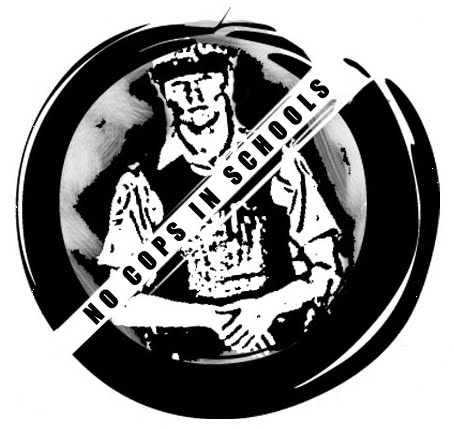
Two hundred students gathered on either side of Roehampton St. south of Northern Secondary School at 11:30am on Thursday, October 22 to protest the arrest of a 16-year-old male on October 2 and also to protest the very presence of the police officer in their school. The “School Resource Officer” (SRO) Initiative, started by the Toronto Police Service and the executive of the Toronto District School Board (TDSB) in 2008-09 and expanded in 2009-10, has led to the presence of uniformed and armed police officers in fifty high schools across Toronto. The demonstrators demanded the immediate removal of the SRO from Northern and a “fully-open, publicized public community consultation regarding the SRO Initiative at Northern.”

The SRO Initiative was implemented in response to issues of safety in schools, but it effectively ignores the recommendations made in actual inquiries into the problem. In January 2008, a report on safety in schools commissioned by the TDSB and led by human rights lawyer Julian Falconer made several recommendations, most specifically increasing the number of youth workers and programmes available for marginalized youth. Since the implementation of the SRO Initiative, Falconer has explicitly stated that police in schools is not the answer. Indeed, it does little to address the marginalization of youth that results from overall social and systemic neglect.

But instead of making the funding for proper programmes available, politicians have instead increased funding for the police even as crime rates drop. This has led to the adoption of the SRO Initiative, which doesn’t cost the TDSB a thing. Alok Premjee, an organizer with NOCOPS, the Neighbourhood Organized Coalition Opposed to Police in Schools, argued that putting police in schools is an “intensification of the police state.” Premjee remarked that it was a way for the government to increase its surveillance of the population at large and to keep them in check, rather than improving people’s lives.

Protesting students at Northern agree with Premjee, one of them holding up a sign stating, “This school is not a police state.” “This is very much a grassroots movement; students are outraged and our questions are not being answered,” said Max Naylor, a grade eleven student and one of the organizers of the protest. Safety concerns at the school have been dealt with by installing cameras and requiring all members of the school community to wear lanyards with identification cards, as well as by hiring hall monitors, thus calling into question the need for police officers. “The main issue is that students feel uncomfortable with an armed officer in the school. It makes us feel like the school belongs not to students but to the police,” he said.

“Tonight’s Your Lucky Night”

31 Division raids Jane/Finch home, terrorizes family, finds nothing

BASICS #16 (Nov / Dec 2009)

by Wasun

On Sunday November 1st, 2009, 31 Division conducted a raid at 40 Turfgrass Way, Apartment 113 in a TCHC complex in the Jane and Finch area. That night, 18 year-old Brandon Miller, his 14 year-old sister, Shaquel Miller along with their mother, Dorolee Miller, were brutally assaulted and left feeling terrorized by this unjust search for guns in their home, in which nothing was found and no charges were laid.

Shortly after 1 a.m. in the morning, police broke down the door of the Millers while the family slept. Officers first handcuffed the mother, and she adamantly tried to stop them from beating her son in his room, but one of the cops shoved her into her dresser. Dorolee informed police of her various health conditions which they chose to ignore dragging her down the stairs in handcuffs and pointing a gun in her face. Soon thereafter they brought her 14 year-old daughter down in handcuffs.

While Dorolee and Shaquel were under the gun guarded by police in the living room, 18-year-old Brandon was being beaten upstairs in his room. One officer held Brandon down his boot on his neck. Brandon begged him to remove his boot from his head but the officer replied, “Stop whining”. The raid turned up no guns and no charges were laid. But their house was in shambles, and an innocent family was terrorized by this occupying force in the Jane/Finch community. In the words of Dorolee who was traumatized by this incident: “This shouldn’t happen to nobody at all. They come in my house and didn’t find anything. They didn’t even say sorry, just ‘Tonight’s your lucky night’.”

Morolee Miller and her son, 18-year-old Brandon Miller, were both the victims of a brutal raid on their home by Toronto Police of 31 Divsion which yielded nothing but terror and a ransacked home.

U of T Continues Attack on Accessible Education and Marginalized Programmes

BASICS #16 (Nov / Dec 2009)
by Noaman Ali

Huda is a 22-year-old young mother with a disability who intends to study Sexual Diversity Studies, Creative Writing, Visual Arts and French at the University of Toronto. “It’s a lot, but I’m focused because of the support that TYP provides me.” In an educational system and society that repeatedly fails working people, the Transitional Year Programme (TYP) is one initiative that reaches out, usually to people who haven’t finished high school, and gives them support in an intensive one-year programme to transition to a more conventional university education.
Brandon, 23, grew up in Toronto Community Housing in Scarborough and was first arrested when he was 14. Caught up in “guns, drugs, and crime,” he made an attempt to turn his life around at 17. Now in TYP, he wants to be a teacher.

On Monday, October 19, administrators at U of T attempted to pass a proposal at a meeting of the Faculty of Arts and Science Council that would have weakened the program, according to students, alumni and faculty who have formed the TYP Preservation Alliance. Over fifty of them –almost all people of colour from working-class communities – showed up at the meeting to protest the move. The proposal sought to merge TYP, administratively, with Woodsworth College, but the Alliance argued that the merger was a cost-cutting measure that would result in staff cuts. In addition, Ahmed Ahmed, a recent TYP graduate, noted, “Three faculty members will have retired by the end of December, and they are not being replaced.”

Joe Desloges, Principal of Woodsworth College, effectively confirmed the fears of the TYP Preservation Alliance about funding cuts. The University “can’t guarantee staff positions. TYP faces identical challenges regardless of where it’s located,” he said. Ultimately, the Faculty of Arts and Science Council voted to delay the vote on the proposal after seeing the mobilization of the TYP Preservation Alliance and its solid arguments. “Programmes like TYP must be inflation- and recession-proof,” said professor and council-member Harry Fox. U of T Provost Cheryl Misak said in an e-mail sent the next day that because of the Alliance’s organized opposition, the move was “off the table.” In this sense, the TYP Preservation Alliance won a victory, but a partial one.

The Alliance will still have to fight further funding cutbacks. Meanwhile, other programmes at the university, particularly in area studies and equity studies, are also facing cuts. On October 29, over forty students and faculty gathered at New College at a town hall meeting held by the Equity Studies Students’ Union in order to organize against the cutting of a faculty member in Disability Studies. There is only one other faculty member at U of T who focuses on disability, even though people with disabilities make up over 15% of the Canadian population and are far more likely to live in poverty.

These cuts come after U of T’s administration recently introduced a “flat fees” system for the Faculty of Arts and Science. This means that students who might have taken three courses because they could not afford the full fee now have no option but to take five courses, and they cannot work part-time to fund their studies. This move came after U of T’s administration had fourteen students and activists arrested in 2008 for protesting increased tuition fees—the trumped-up charges were all eventually stayed or withdrawn.

There has been a broad pattern to restructure universities to more intensely cater to the needs of private corporations and wars instead of to the needs of public welfare and working people. Students are going to have to continue to organize in order to roll back cuts to programs that are already marginalized, to eliminate all fees for postsecondary education and to make university relevant and accessible to working people in Canada.

Death from Above

The “Peace” President Obama’s Indiscriminate Bombing of Pakistan

BASICS #16 (Nov / Dec 2009)
by J.D. Benjamin

Almost a year after the election of U.S. President Barack Obama, the rhetoric of “hope” and “change” has been dashed against the brutal realities of an escalating campaign of targeted assassinations using remote controlled “predator” drones. During the first ten months of his presidency, Obama authorized the Central Intelligence Agency to launch remote drone attacks on Pakistani territory more than 41 times: as many drone attacks as President Bush carried out during his last three years in office.

In a recent report to the United Nations Human Rights Committee, Philip Alston, the UN Special Rapporteur on Extrajudicial, Summary or Arbitrary Executions, criticized the use of drone attacks, saying that “these drones, these predators, are being operated in a framework which may well violate international humanitarian law and international human rights law. The onus is really on the government of the United States to reveal more about the ways in which it makes sure that arbitrary executions, extrajudicial executions, are not in fact being carried out through the use of these weapons.”

The United States has ignored Alston’s concerns, claiming that the UN Human Rights Committee or General Assembly have no role regarding killings carried out in an armed conflict. Alston has retorted that the American position is “simply untenable”.

Estimates of the death toll resulting from drone attacks are over 700 people in northwest Pakistan alone. This includes not only suspected armed fighters, but also anyone who happens to be nearby, including women and children. In one June 2008 strike, the CIA killed more than 80 people and maimed dozens more in a funeral procession for people who had died in an earlier attack. Such attacks have stirred bitter hatred amongst the local population and pushed many to join the armed resistance against the NATO occupation.

Nepali Maoists Launch Insurrectionary Wave for People's Supremacy and New Democracy

BASICS #16 (Nov / Dec 2009)
by Derek Rosin

This November 1st, Nepal’s Maoist revolutionaries initiated a new mass movement aimed at bringing down the current government in Nepal. This potentially history-making movement is unfolding as we go to press.

The Maoists of the Unified Communist Party of Nepal (Maoist) began their rise to power and influence in 1996 by initiating a decade-long armed rebellion they called the “People’s War”. Starting off small, the Maoist movement was able to strengthen and grow by relying on and leading mostly-poor Nepali peasants to fight and overthrow the forces of government in the countryside, then represented by an absolute monarchy. In their place, they began constructing a new society by taking steps to end gender and caste oppression, introducing forms of popular democratic government, and providing for people’s basics needs like health care and education.

In November 2006, the UCPN(M) decided to end one phase of the revolution by signing a peace treaty with the country’s mainstream political parties – who for their own particular reasons could no longer tolerate the monarchist system.

As part of this agreement, an election was held for a Constituent Assembly to decide on the new structure of Nepalese government and society. In the April 2008 vote, Maoists emerged as the biggest and most influential party. This shocked nearly everyone except the Maoists themselves, who knew the huge support they had been building throughout Nepal. In May 2008, the monarchy was abolished. Shortly after that, Prachanda, leader of the UCPN(M), was elected Prime Minister.

The Maoists’ tactics of jumping from the armed to the unarmed movement, then from working in the government to building massive street movements may seem confusing at first, but it is consistent with their overall strategic approach. Since the inception of their movement, Maoist tactical considerations have been girded to two key stated beliefs: First, that the success of the social revolution they want to carry out will ultimately rest on the use of armed force; and second, that their revolution must, if it to be truly liberating, be carried out by the Nepalese people themselves.

As senior Maoist leader Baburam Bhattarai has said, “To break with the old mode of production and leap into a new one, you have to break all the relations within the state backed by the army.”

In May of this year Prachanda, before he stepped down as Prime Minister, tried to fire the head of the Nepalese Army, General Katawal, for refusing to consider the integration of the state’s armed forces with the Maoist-led People’s Liberation Army (PLA). Katawal refused to step down, and was supported by Nepal’s two biggest mainstream political parties.

Subsequently, Prachanda immediately resigned as Prime Minister, explaining to the Nepalese people that the Army was illegally refusing a government directive and that the mainstream parties were colluding to prop up this anti-democratic move. Now the Maoists could show clearly to people the limitations and obstacles of trying to make change purely through electoral and government channels. They proved that a fresh round of struggle was needed to advance the new democratic movement.

Fast forward a few months to today, and the Maoists are leading huge numbers of Nepalese in the streets of the capital Kathmandu to demand that “civilian supremacy” (democratic people’s control) over the Army be implemented.

Leading members of the Unified Communist Party Maoist march with the people during the torch rally of November 1, the first of a series of mass actions planned for the next two weeks. The Maoists are rallying the people to bring down the current government of Nepal.

The situation is tense, and for good reason. Having balked at civilian supremacy in May, the mainstream parties look unwilling to budge, and have hinted at mobilizing army units to repress the new uprising. The Maoists, who have never disarmed their armed-wing, the People’s Liberation Army, are now mobilizing people in the urban and rural areas, readying themselves for a final insurrection that they have long-maintained would be an inevitable component of their revolution.

Should this movement succeed, it would be just the beginning of a long road of transformation. The Nepalese revolutionaries have acknowledged that they are a small, undeveloped, and isolated country, and it will be very difficult to sustain their revolution surrounded by powerful enemies.

On the other hand, the very existence of the Nepalese movement is proving that it is possible to make revolution in the 21st century. Further advances in Nepal could have an electrifying effect on people and movements opposed to the current world set-up – those who want to break out of the established order but are unable to articulate how. In other words, after a long absence, the idea of “communism” may once again find its way into the thoughts of the oppressed.

To learn more about the situation in Nepal, visit the website of Lal Salaam! Canada Nepal Solidarity Group.

Haiti’s Minimum Wage Struggle

Choice Between Super-Profitability and Two Meals a Day

BASICS #16 (Nov / Dec 2009)

by Niraj Joshi

The United Nations Security Council has just voted to extend the UN “peacekeeping” mission in Haiti (MINUSTAH) for another year. MINUSTAH will now enter its sixth year of illegal occupation, in violation of both the Haitian constitution and international law. The military force was imposed on Haiti in June 2004 and used to violently contain and repress the popular resistance to the western-backed 2004 coup d’etat against President Aristide. Since the 2006 election of President Preval, it has been used to violently contain and repress popular resistance to the neoliberal and imperialist program imposed on the Haitian government, and which has only worsened poverty and increased misery on the Caribbean island.

Such has been the case in the last months when several thousand workers and students have tirelessly protested President Preval’s failure to raise the minimum wage in Haiti. The protestors were brutally repressed by MINUSTAH and the Haitian police, with at least two demonstrators killed and several others beaten and arrested.

Haiti has the lowest minimum wage in the hemisphere. In May of this year both chambers of the Haitian parliament voted to increase the minimum wage from the daily 70 gourdes to 200 gourdes ($5.32 Cnd). The current 70 gourdes is not even enough to cover transportation and two meals a day. Even the proposed 200 gourdes is not an actual increase but rather an adjustment, since inflation has soared drastically beyond the purchasing power of the minimum wage. However, it is a small step toward alleviating the rampant poverty endured by Haitian workers. The last minimum wage raise happened in 2003 under President Aristide, but was immediately revoked by the western-installed dictatorship after Aristide was kidnapped by the joint forces of U.S., Canada, and France.

But under foreign occupation, President Preval has yielded to the demands of international institutions, foreign governments and the business sector. He has blocked the wage raise arguing it would hurt the country’s maquialdora sector (the tax-exempt plants that assemble products mostly for export and that is slated for expansion – but that produces some of the most exploitive and precarious employment in the country). Foreign factory owners, such as Canada’s Gildan Activewear, have threatened to shut down because they cannot afford to pay the higher wages (Gildan cleared 150 million in profits this year and projects a free cash flow of $600 million over the next 3 years).

A compromise of a woefully deficient raise to 125 gourdes is likely to be passed. However, the foreign investor’s export zones (where most of the lowest paid jobs exist) will be exempt! Haiti under American, Canadian and UN occupation remains on its neoliberal course despite the moderately contrary efforts of some of its legislators. And if outraged Haitian workers chose to resist with strikes or protests, the MINUSTAH “peacekeeping” forces will be on site to take up their military position and lead the unruly back to their slave-like posts.
Demonstrators rally outside the Haitian Parliament to demand a minimum wage increase to 200 gourdes ($5 dollars / day) - which would still remain the lowest wage in the western hemisphere.

India Launches War Against Tribals

Counter-insurgency offensive is really a resource and land grab
BASICS #16 (Nov / Dec 2009)

by Dhruv Jain

On June 17, 2009, the Indian state launched a major counter-insurgency offensive, Operation Lalgarh, to “restore law and order” to the West Midnapore district of West Bengal. In the months leading up to the military offensive, the adivasi, or tribal, populations of Lalgarh and surrounding villages in the district had been subject to consistent police harassment, including the torture and detainment of tribals on the slightest suspicion of rebel activity.

To protect the autonomy and self-governance of the area, villagers formed the People’s Committee Against Police Atrocities (PCAPA). As the people’s movement had support from the Maoist party, the state quickly labeled the organic, self-directed community uprising a Maoist rebellion. Although the Maoist party only played an advisory role and was only one of the progressive forces supporting the movement, the Indian state was able to employ its commonly-used scare tactic of labeling villagers opposed to state intervention as “Maoists”. Paramilitary forces suppressed the movement in twelve days through the recapture of the villages, but did not defeat it.

In the months following the June offensive, the people’s movement – under the leadership of the PCAPA – has continued to grow and resist, while the police harassment has escalated. On September 27, 2009, Chhatradhar Mahato, a key leader of the PCAPA, was arrested for sedition and raising funds for the Maoists.

In early October 2009, the Central Government of India announced that they would start preparations for a major anti-Maoist offensive. What they did not announce is that this major offensive would serve as a huge resources and land grab. The government had entered into hundreds of secret memorandums of understanding (MOUs) with companies that include mining corporations and information technology parks. The communities had not been consulted about the business deals and actively resisted the “development projects” the national government was championing for the area. Areas like Lalgarh, largely inhabited with tribal populations, are mineral-rich and the people recognize that the companies that exploit these resources will not contribute to their livelihoods. These so-called ‘development’ projects would effectively dispossess tribal populations from their ancestral lands and allow for greater exploitation of the population, including a highly exploitative labor market. Thus, under the veneer of an anti-Maoist offensive, the Indian state hopes to achieve the final suppression of tribal populations from the area.

However, the people of Lalgarh are not alone. A national and international campaign has begun to stop the offensive. A petition signed by luminaries including Noam Chomsky, Arundhati Roy and several hundred human rights activists and academics was presented to the Indian government calling for the immediate halt to the offensive and to have the MOUs made public to the tribals so that they can decide for themselves how to improve their lives.

Women from the People’s Committee Against Police Atrocities (PCAPA) carry axes and bows as they form a road block in protest of widespread police atrocities in Lalgarh. April 2009.