by Enver Harbans
Basics Issue #13 (Apr/May 2009)
The current economic crisis is being repeatedly used to justify capital’s assault on the working-class. Whether it’s in the form of cutbacks on hours in a non-union grocery store, a freeze or cutback of wages and benefits at the bargaining table, or closures at unionized car plants, the recession has been used as an excuse for owners to cut labour costs at every opportunity.
Job losses in Canada for the month of January alone were at 129,000, the largest since the government started recording such data. February wasn’t much better, with 82,600 jobs shed mostly in the construction and manufacturing sectors. Ontario in particular has been hit hard, as 1,500 workers at the Stelco plant in Hamilton were laid off and 900 workers at the Dofasco plant got pink slips in March. With the unemployment numbers growing (officially, 7.7%, but in reality much higher) employed workers can expect an attack on their wages and benefits. Just ask union members who are in the process of bargaining new collective agreements and being expected to make countless concessions before talks even begin. Owners and bosses are telling us that we should be happy that we even have a job and they threaten cutbacks, layoffs and closures when we demand a share of the company’s profits.
However, while the attacks on workers have been hard and swift, workers’ resistance is beginning to develop. Workers at Aradco in Windsor, Ontario occupied their car parts plant after the company withheld over $1.3 million in severance pay, vacation pay and other benefits. On March 18, workers welded the doors of the plant shut, refusing to take the measly $200,000 the company offered to share amongst the 80 workers. Unfortunately, to date, this example of workers uniting to take control over the factories to demand a little bit of justice has not been replicated to meet the gross injustices unfolding around us.
In the 2009 Federal Budget, the Canadian government passed another $200 billion in bailout money for the banks, on top of the $75 billion already passed in the end of 2008. With banks and other major financial corporations in the U.S. and Canada getting bailed out to the tune of hundreds of billions, why are workers being asked to forget about their severance pay, and why is their EI lost in the mix? While the rich can count on the State for bailouts and assistance, workers need to count on each other, and organize in their communities, workplaces and schools to fundamentally change the way this system works.
Showing posts with label crisis. Show all posts
Showing posts with label crisis. Show all posts
Thursday, April 16, 2009
Canada’s Bank Bailout $275 Billion and Counting…
by Steve da Silva
Basics Issue #13 (Apr/May 2009)
According to Statistics Canada, in the last quarter of 2008 Canada’s economy shrank at an annualized rate of 3.4%, and it’s expected that the economy contracted at an even faster rate in the first quarter of 2009. This means that Canada is officially in a recession, defined as a period of at least six months of economic contraction. Despite the reassurances made by Canada’s politicians, as the job losses amount into the hundreds of thousands and with an unemployment rate of 8%, there is nothing for workers to be optimistic about.
And how has the Canadian government responded to what is scaling up to become the greatest economic crisis in Canada and the world since the 1930s?
In late 2008, the Canadian government injected $75 billion into the Canadian banking system in order to buy up unstable mortgage debts held by the banks in a program called the Insured Mortgage Purchase Program (IMPP). Preparing themselves for worse times ahead, the Canadian banks quietly liquated their soon-to-be-troubled assets in exchange for cold, hard cash from the public purse.
With a nearly total media blackout on the decision and thus no opposition to check this unprecedented transfer of wealth from the public to the rich, the back-room dealings were taken to new levels in early 2009 as Canada’s banks were pushing for more bailout money. The Conservative government – with the silent complicity of their “opponents” in Parliament – passed the 2009 Federal Budget which approved an additional $200 billion in bailout money under a program they called the Extraordinary Financing Framework (EFF). While much adieu was made about the Federal Budget’s estimated 5-year $85 billion deficit, nothing at all was said about the plan to spend $200 billion to bail out the banks. This bailout was not calculated into the deficit projections because, as the budget tells us, in return the government was getting “revenue-bearing assets” from the banks. Well, the question immediately follows: If these assets were bearing revenue, why would the banks by trying to liquidate them in the first place? When these assets begin to fail in the coming months and years, it is now working-class Canadians who are going to be picking up the bill for these toxic liabilities.
By early March 2009, the Bank of Canada lowered its interest rate to an all-time record low of 0.5%, a move that economists compared to making a decision to launch nuclear warfare. What this move signaled was the Bank of Canada’s preparations to flood the economy with new dollars that are going to be used to buy up billions of dollars of corporate debt, which is setting the stage for pushing the bank bailout beyond $275 billion.

As the Canadian economy moves into depression territory, all signs suggest that the Canadian government and every political party represented in it are going to stand firm as staunch defenders and apologists for the bankers and big business. The majority of us, in the meantime, can either sit back and watch our interests continue to be attacked; or we can begin organizing ourselves to seriously confront the capitalist class relations that are allowing these outrages to be carried out.
Basics Issue #13 (Apr/May 2009)
According to Statistics Canada, in the last quarter of 2008 Canada’s economy shrank at an annualized rate of 3.4%, and it’s expected that the economy contracted at an even faster rate in the first quarter of 2009. This means that Canada is officially in a recession, defined as a period of at least six months of economic contraction. Despite the reassurances made by Canada’s politicians, as the job losses amount into the hundreds of thousands and with an unemployment rate of 8%, there is nothing for workers to be optimistic about.
And how has the Canadian government responded to what is scaling up to become the greatest economic crisis in Canada and the world since the 1930s?
In late 2008, the Canadian government injected $75 billion into the Canadian banking system in order to buy up unstable mortgage debts held by the banks in a program called the Insured Mortgage Purchase Program (IMPP). Preparing themselves for worse times ahead, the Canadian banks quietly liquated their soon-to-be-troubled assets in exchange for cold, hard cash from the public purse.
With a nearly total media blackout on the decision and thus no opposition to check this unprecedented transfer of wealth from the public to the rich, the back-room dealings were taken to new levels in early 2009 as Canada’s banks were pushing for more bailout money. The Conservative government – with the silent complicity of their “opponents” in Parliament – passed the 2009 Federal Budget which approved an additional $200 billion in bailout money under a program they called the Extraordinary Financing Framework (EFF). While much adieu was made about the Federal Budget’s estimated 5-year $85 billion deficit, nothing at all was said about the plan to spend $200 billion to bail out the banks. This bailout was not calculated into the deficit projections because, as the budget tells us, in return the government was getting “revenue-bearing assets” from the banks. Well, the question immediately follows: If these assets were bearing revenue, why would the banks by trying to liquidate them in the first place? When these assets begin to fail in the coming months and years, it is now working-class Canadians who are going to be picking up the bill for these toxic liabilities.
By early March 2009, the Bank of Canada lowered its interest rate to an all-time record low of 0.5%, a move that economists compared to making a decision to launch nuclear warfare. What this move signaled was the Bank of Canada’s preparations to flood the economy with new dollars that are going to be used to buy up billions of dollars of corporate debt, which is setting the stage for pushing the bank bailout beyond $275 billion.

As the Canadian economy moves into depression territory, all signs suggest that the Canadian government and every political party represented in it are going to stand firm as staunch defenders and apologists for the bankers and big business. The majority of us, in the meantime, can either sit back and watch our interests continue to be attacked; or we can begin organizing ourselves to seriously confront the capitalist class relations that are allowing these outrages to be carried out.


Tuesday, February 17, 2009
The Power of People: Community Responses to Capitalism in Crisis Public Meeting and Meal: Lessons Learned and Looking Ahead
Sunday March 1st, 2009
Time: 3pm (Meal at 5pm)
Location: OISE, 252 Bloor Street West (St. George Subway Station), Main
Auditorium
Free Meal will be served after the event!
By Donation / PWYC
---------------------------------------------------------------------
Featuring:
Max Rameau, Take Back the Land (Miami, Florida)
Richard St. Pierre, Longtime Quebec activist and member of the
Internationalist
Workers Group (Montréal, Quebec)
Cynthia Palmaria, Migrante-Ontario (Toronto, Ontario)
John Clarke, Ontario Coalition Against Poverty (Toronto, Ontario)
---------------------------------------------------------------------
Please join us for an evening of discussion and food. Come hear directly
from a diverse panel of community organizers about their experiences and
strategies, including Max Rameau, an organizer with the Miami-based 'Take
Back the Land', a grassroots group that, as a result of the crises of
gentrification, housing and now foreclosures, has been liberating public
and foreclosed land and homes since 2006.
The current crisis of capitalism has long been forming, but it is much
broader than the current credit crunch, plunging stock and housing
markets. This crisis is about our ability to buy food, to afford housing
and transit, find work, and access welfare and disability support money.
And yet, in this country, as in many parts of the world, billions of
dollars are earmarked for corporate bailouts, while people face a crisis
of survival. So-called 'stimulus packages' do not address the perpetual
roll-back in our social gains - public education, affordable housing,
health care, collective bargaining, a living wage, safe work conditions, a
non-toxic, sustainable environment. In the City of Toronto, spending on
social housing is dropping annually, subsidized daycare spots are set to
be slashed, basic social services cut, and a majority of us do not and
will not qualify for EI. Women and migrant workers' needs are not even on
the table.
But we didn't break the system – one that never worked for us in the first
place. We should not be forced to pay for it.
Only through bitter struggle have we won any measure of justice and
dignity for our communities. The current financial crisis is and will
continue to hit poor, marginalized, working, and racialized communities
first and hardest. Make no mistake – the rich are scrambling to save
themselves.
Please join us to discuss an inspiring history and present examples of
resistance, and ways we can come together to fight for what is ours, for
what our families and neighbourhoods really deserve.
-----------------------------------------------------------------------------------------------------
Max Rameau is an organizer with the Miami-based 'Take Back the Land'. As
a result of the crises of gentrification, housing and now foreclosures,
Take Back the Land has been liberating public and foreclosed land and
homes since 2006. They believe that every community has the right to
control the land upon which people live, work, play, learn and worship.
Take Back the Land is, therefore, asserting the right of the Black
community to control the land in their community and use it for the
benefit of their community, including, but not limited to, providing
housing for their members in need. They urge every community to exercise
the same right.
Richard St. Pierre is a long-time Quebec activist and member of the
Internationalist
Workers Group.
Cynthia Palmaria is an organizer with Migrante-Ontario, an alliance of
Filipino migrants' organizations which is part of the Filipino people's
movement for national liberation and democracy. Migrante's mission is to
continuously uphold and defend the rights and welfare of Filipino migrants
and their families, both at home and abroad. Police violence,
non-enforcement of employment standards, and restrictive visas are just
some of the many weapons used against Filipino migrants that Migrante
organizes to resist.
John Clarke is an organizer with OCAP, a direct-action anti-poverty
organization that mounts campaigns against regressive government policies
as they affect poor and working people. OCAP provides direct-action
advocacy for individuals against eviction and termination of welfare
benefits, and believes in the power of people to organize themselves.
---------------------------------------------------------------------
Sunday March 1st, 2009
Time: 3pm (Meal at 5pm)
Location: OISE, 252 Bloor Street West (St. George Subway Station), Main
Auditorium
Free Meal will be served after the event!
By Donation / PWYC
---------------------------------------------------------------------
Hosted by: OCAP (Ontario Coalition Against Poverty), GGAPSS
(Graduate Geography and Planning Students Society of UofT), and the
Toronto New Socialists
Endorsed by: CAIA (The Coalition Against Israeli Apartheid) BASICS
Community Newsletter, and OPIRG (Ontario Public Interest Research Group)
**
Ontario Coalition Against Poverty
10 Britain St. Toronto, ON M5A 1R6
416-925-6939 ocap@tao.ca www.ocap.ca
**
Time: 3pm (Meal at 5pm)
Location: OISE, 252 Bloor Street West (St. George Subway Station), Main
Auditorium
Free Meal will be served after the event!
By Donation / PWYC
------------------------------
Featuring:
Max Rameau, Take Back the Land (Miami, Florida)
Richard St. Pierre, Longtime Quebec activist and member of the
Internationalist
Workers Group (Montréal, Quebec)
Cynthia Palmaria, Migrante-Ontario (Toronto, Ontario)
John Clarke, Ontario Coalition Against Poverty (Toronto, Ontario)
------------------------------
Please join us for an evening of discussion and food. Come hear directly
from a diverse panel of community organizers about their experiences and
strategies, including Max Rameau, an organizer with the Miami-based 'Take
Back the Land', a grassroots group that, as a result of the crises of
gentrification, housing and now foreclosures, has been liberating public
and foreclosed land and homes since 2006.
The current crisis of capitalism has long been forming, but it is much
broader than the current credit crunch, plunging stock and housing
markets. This crisis is about our ability to buy food, to afford housing
and transit, find work, and access welfare and disability support money.
And yet, in this country, as in many parts of the world, billions of
dollars are earmarked for corporate bailouts, while people face a crisis
of survival. So-called 'stimulus packages' do not address the perpetual
roll-back in our social gains - public education, affordable housing,
health care, collective bargaining, a living wage, safe work conditions, a
non-toxic, sustainable environment. In the City of Toronto, spending on
social housing is dropping annually, subsidized daycare spots are set to
be slashed, basic social services cut, and a majority of us do not and
will not qualify for EI. Women and migrant workers' needs are not even on
the table.
But we didn't break the system – one that never worked for us in the first
place. We should not be forced to pay for it.
Only through bitter struggle have we won any measure of justice and
dignity for our communities. The current financial crisis is and will
continue to hit poor, marginalized, working, and racialized communities
first and hardest. Make no mistake – the rich are scrambling to save
themselves.
Please join us to discuss an inspiring history and present examples of
resistance, and ways we can come together to fight for what is ours, for
what our families and neighbourhoods really deserve.
------------------------------
Max Rameau is an organizer with the Miami-based 'Take Back the Land'. As
a result of the crises of gentrification, housing and now foreclosures,
Take Back the Land has been liberating public and foreclosed land and
homes since 2006. They believe that every community has the right to
control the land upon which people live, work, play, learn and worship.
Take Back the Land is, therefore, asserting the right of the Black
community to control the land in their community and use it for the
benefit of their community, including, but not limited to, providing
housing for their members in need. They urge every community to exercise
the same right.
Richard St. Pierre is a long-time Quebec activist and member of the
Internationalist
Workers Group.
Cynthia Palmaria is an organizer with Migrante-Ontario, an alliance of
Filipino migrants' organizations which is part of the Filipino people's
movement for national liberation and democracy. Migrante's mission is to
continuously uphold and defend the rights and welfare of Filipino migrants
and their families, both at home and abroad. Police violence,
non-enforcement of employment standards, and restrictive visas are just
some of the many weapons used against Filipino migrants that Migrante
organizes to resist.
John Clarke is an organizer with OCAP, a direct-action anti-poverty
organization that mounts campaigns against regressive government policies
as they affect poor and working people. OCAP provides direct-action
advocacy for individuals against eviction and termination of welfare
benefits, and believes in the power of people to organize themselves.
------------------------------
Sunday March 1st, 2009
Time: 3pm (Meal at 5pm)
Location: OISE, 252 Bloor Street West (St. George Subway Station), Main
Auditorium
Free Meal will be served after the event!
By Donation / PWYC
------------------------------
Hosted by: OCAP (Ontario Coalition Against Poverty), GGAPSS
(Graduate Geography and Planning Students Society of UofT), and the
Toronto New Socialists
Endorsed by: CAIA (The Coalition Against Israeli Apartheid) BASICS
Community Newsletter, and OPIRG (Ontario Public Interest Research Group)
**
Ontario Coalition Against Poverty
10 Britain St. Toronto, ON M5A 1R6
416-925-6939 ocap@tao.ca www.ocap.ca
**
Monday, February 02, 2009
The 2009 Federal Budget and the Untold Story of Canada’s $275 Billion Bank Bailout
The Insured Mortgage Purchase Program (IMPP) and the Extraordinary Financing Framework (EFF) is to the Canadians what the Troubled Asset Relief Program (TARP) is to Americans: A cover for hundreds of billions of dollars – trillions in the U.S. – of public funds being dumped into the coffers of parasitic monopoly financial interests.
by Steve da Silva
(A version of this article is forthcoming in Relay #25, the quarterly publication of The Socialist Project.)
If you’re still scratching your head with bewilderment trying to understand how the “free-market” Conservatives could make an overnight about-face into Keynesians – from promising budget surpluses during the October 2008 Federal election to giving us unforeseen budget deficits in the 2009 Budget – then you’ve bought into the terms of a “public” debate that is intended to confuse and conceal what’s really going on. The Conservatives have not broke with old ideas as a last-ditch attempt to hold onto power in Parliament, as many are saying. Rest assured that the Conservatives have been and remain the most shameless representatives of monopoly capitalist interests in this country. Over the last three months, the Conservatives – taking the lead from Bush and Obama presidencies in United States and most other imperialist countries – have begun to implement one of the largest transfers of public wealth in Canadian history, channeling untold amounts of public funds into the coffers of the banks and other monopoly financial interests, accounting for at least $275 billion in “bailout” money.
Meanwhile, the pseudo-opposition Liberals and NDPers have de-facto gone along with the ruling party’s proposals by refusing to shift the terms of the debate onto what really matters. While the attention of Canadians were being diverted by the political theatrics of the last three months – with the October 2008 elections, the prospects of an NDP-Liberal coalition, the British Crown’s representative to Canada Michaëlle Jean shutting down Parliament, and the anti-climactic display of Jim Flaherty’s “leaky budget” in mid-January 2009 – a conspiracy of silence has prevailed as the Canadian government swapped hundreds of billions of dollars for questionable assets held by Canada’s banks. This while millions of Canadian working-class were people being walloped by the economic crisis, with hundreds of thousands of lost jobs, pension funds suffering historic losses, (Footnote 1) and EI failing to pay out to workers what they pay in to it. (Footnote 2)
In order to fully take stock of what has occurred in the last three months, let’s return to October 2008 when this untold drama began unfolding.
“Cash for Trash” Under the Cover of “Credit for Consumers”
In October 2008, with the current crisis of monopoly finance capitalism in full swing and the U.S. government preparing to implement its controversial $700 billion “Troubled Asset Relief Program” to buy up junk assets from financial corporations – only one of a series of bailouts that would eventually reach some $8.5 trillion (Footnote 3) – unbeknownst to most Canadians the Government of Canada was in the process of implementing its own “bailout”.
Days before the 2008 Federal Election in Canada, Prime Minister Stephen Harper announced that the Government of Canada, through the Canadian Mortgage and Housing Corporation, would purchase “$25 billion in insured mortgage pools as part of the Government of Canada’s plan, announced today, to maintain the availability of longer-term credit in Canada.” (Footnote 4)
It’s instructive to note that with this announcement falling just four days before the Federal election either the Liberals or the NDP could have generated a groundswell of popular dissent by exposing and opposing this bailout and rode that wave right into power. They did not oppose the bailout then, and their silence on what was to follow has shown the degree to which these parties serve monopoly capitalist interests.
Emboldened by the success of the first phase of the bailout scheme having being carried through with no dissent from the Canadian people, Bay Street began publicly pushing the Canadian government to expand the plan to beyond $200 billion. (Footnote 5)
On November 12, 2008 the Canadian Department of Finance announced that it would buy up another $50 billion in securities through the Canadian Mortgage and Housing Corporation as part of its Insured Mortgage Purchase Program (IMPP):
The Honourable Jim Flaherty, Minister of Finance, today announced the Government will purchase up to an additional $50 billion of insured mortgage pools by the end of the fiscal year as part of its ongoing efforts to maintain the availability of longer-term credit in Canada.
This action will increase to $75 billion the maximum value of securities purchased through Canada Mortgage and Housing Corporation (CMHC) under this program. (Footnote 6)
Simultaneously, the government also announced that they would indeed “guarantee… more than $200 billion to pay back new loans made to Canadian financial institutions.”7
With $75 billion in the bag, and no signs of mass opposition to this massive transfer of public wealth to the banks – not even nominal opposition from any of the main federal political parties – there were no forces standing in the way of the Canadian government buying up another $200 billion of bad assets from Canada’s chartered banks.
The 2009 Federal Budget:
Unbeknownst to most Canadians, this $200 billion program has already been approved by the Canadian government in the form of the 2009 Federal Budget.
The devil is in the details of Table 4.7 of the Budget, reproduced here (click to view):

In the first line, one can find the budgetary numbers that sum up to the much discussed $85 billion deficit. In the line entitled “Insured Mortgage Purchase Program” one can find the $75 billion CMHC buyout. And then, at the very bottom of the table, in the line entitled “Financial source / requirement” one finds the $200 billion + in additional funds. How does the budget explain this massive financial expenditure?
In its own words, the
significant financial requirements are projected from 2008–09 to 2011–12, respectively of $103.7 billion in 2008–09, $101.2 billion in 2009–10, $30.7 billion in 2010–11, $11.4 billion in 2011–12, as well as financial sources of $3.9 billion in 2012–13 and of $47.3 billion in 2013–14. The requirements result largely from government initiatives to support access to financing under the Extraordinary Financing Framework (EFF). (Footnote 8)
And there it is: The “Extraordinary Financing Framework” (EFF) – a mere footnote buried in the 2009 Budget to account for one of the greatest financial raids of public funds in Canadian history, the consequence of which will be a public debt so large that it will have to be serviced through the mass privatization and elimination of the social programs which Canadians take for granted. Google Canada’s “Extraordinary Financing Framework” and you get under 300 hits. By comparison, Google the U.S. $700 billion “Troubled Asset Relief Program”, and you get more than a million hits.
Worry not, the Budget reassures us, since “the large increase in market debt associated with the Insured Mortage Purchase Program (IMPP) does not affect federal debt or the federal government’s net debt levels as the borrowings and associated interest costs are matched by an increase in revenue-earning assets (my emphasis).”
If the bank assets purchased under the IMPP and to be purchased under EFF are indeed stable revenue-earning assets, does this not raise the question of why these institutions are liquidating them? For liquidity, of course, so the banks could get on with their lending – or so we’re told.
If these assets are generating profitable revenue streams, then these banks would have little need to dispose of them. In the current climate of hundreds of thousands of jobs being wiped out in the Canadian economy, the default rate on consumer and household debt is set to soar, and these assets will be hit hard, just as they were in the U.S. with the sub-prime mortgage debacle. And when these assets default, it will be Canadians who will be left to foot the bill.
And what are the banks planning to do with all of this “liquidity”?
In response to the January 27 budget, Ottawa-based economist and editor of globalresearch.ca Professor Michel Chossudovksy wrote “We are not facing a budget deficit of Keynesian style, which encourages investment and demand for consumer goods and leads to increased production and employment.” Rather, as he points out,
Canadian chartered banks will use the money to salvage the time to consolidate their position and fund the acquisition of several U.S. financial institutions' problem… For example, in 2008, TD Canada Trust has acquired Commerce Bancorp of New Jersey, making it the second largest transaction of a Canadian mergers and acquisitions valued at $ 8.6 billion U.S.9
The massive deficit accounted for in the 2009 Federal Budget is not directed at “stimulus spending” to create jobs for unemployed workers in the “real” productive economy, invest in public infrastructure to renew decaying and underfunded public services, or increase accessibility to Employment Insurance and welfare benefits. This is one of the boldest and most overt series of attacks by monopoly capital on the vast majority of Canadians.
The players may have changed, but the game remains the same. As V.I. Lenin demonstrated nearly a hundred years ago in Imperialism, The Highest Stage of Capitalism and other works, capitalist crises are the opportunity for greater concentrations of wealth and monopolization of industry. Canada’s present experiences with the IMPP and EFF are evidence of where that wealth comes from and where that wealth is going.
Economic Crisis as a Prelude to Social and Political Crisis
There is no shortage of resources in our economy or at the disposal of our state to meet the challenges and resolve the social crises that the majority of Canadians are facing in the current economic crisis; only a shortage of political organization among the working-class and other modest-income to have a meaningful say over how these resources are spent; or, for that matter, the operation of the entire economy.
So, if the “open and democratic” liberal society that Canada is couldn’t produce a single dissenting political current in the electoral realm, a single voice of opposition in our “free press” (which is actually one of the most concentrated in the industrialized world), if only a handful of Canadians are writing about Canada’s bailouts, and such a small fraction of Canadians even know about it, while millions will experience the devastating social and economic consequences, what does this tell us about the nature of political power in Canada? And if it simply can’t deliver to goods for us, what comes next?
Left to the devices of Canada’s monopolistic ruling-class, the solution to the current crisis will be the complete gutting of social spending, a new round of attacks on organized labour and the real wage, an increased dependence on imperialism for profits, and all the militaristic campaigns that this necessitates. (In the midst of our economic crisis, we shouldn’t be holding our breath to see cutbacks in the $500 billion military budget pledged by the Conservatives in the summer of 2008).
Canada is long overdue for a serious upsurge in militant grassroots organizing with a socialist orientation. As capitalism proves itself to be nearing economy bankruptcy, we need to come to terms with how morally and politically bankrupt it is as well. What the people’s of the oppressed countries of the world or the indigenous peoples of this land have been telling us for centuries Canadians are beginning to wake up to: That Canadian monopoly capitalism is a parasitic system, and it can’t persist without the constant expansion of war, the intensification of exploitation, further environmental destruction, new territorial conquests, support for state-terrorism and state-sanctioned terrorism, and perhaps even new world wars to redivide the world’s people and resources among the major imperialist powers.
The choice is ours. It’s this bleak future, or we begin to organize ourselves for something else. That historical something else to capitalism and imperialism, as the people’s movements in places like Venezuela, Bolivia, Nepal, or the Philippines are demonstrating to us today, can only be socialism.
(1) See Steve da Silva, “Canada’s Bailouts: A Whole New Round of Attacks on the Working-Class”, BASICS Free Community Newsletter (Issue #12, Jan/Feb 2009) .[ http://basicsnewsletter.blogspot.com/2009/01/canadas-bailouts-whole-new-round-of.html]
(2) See J.D. Benjamin, “The Great Employment Insurance Rip-Off”, BASICS Free Community Newsletter (12 January 2008).
[http://basicsnewsletter.blogspot.com/2008/01/great-employment-insurance-rip-off.html]
(3) See Kathleen Pender, “Government bailout hits $8.5 trillion”, San Francisco Chronicle (26 November 2008).
[http://www.sfgate.com/cgi-bin/article.cgi?f=/c/a/2008/11/26/MNVN14C8QR.DTL&hw=bailout+debt+trillion&sn=001&sc=1000]
(4) CMHC News Release, “Canada Mortgage and Housing Corporation Supports Canadian Credit Markets”, CMHC (10 October 2008).
[http://www.cmhc-schl.gc.ca/en/corp/nero/nere/2008/2008-10-10-1700.cfm]
(5) Paul Vieira, “Ottawa's steps have worked so far: Flaherty”, FinancialPost.com (22 October 2009). [http://www.nationalpost.com/related/links/story.html?id=899369]
(6) “Government of Canada Announces Additional Support for Canadian Credit Markets”, Department of Finance Canada (12 Nov 2008).
[http://www.fin.gc.ca/n08/08-090-eng.asp]
(7) Ann Miller, “Banks get all their wishes fulfilled” National Post (13 November 2008). [http://www.globaltv.com/globaltv/winnipeg/story.html?id=954383]
(8) “Chapter 4: Fiscal Outlook” of Canada’s Economic Action Plan: Budget 2009, Government of Canada (27 January 2009).
[http://www.budget.gc.ca/2009/plan/bpc4-eng.asp]
(9) Chossudovksy, “Canada: Opération «Relance économique», $200 milliards pour les banques”, globalresearcg.ca (28 January 2009).
[http://www.mondialisation.ca/index.php?context=va&aid=12076]
by Steve da Silva
(A version of this article is forthcoming in Relay #25, the quarterly publication of The Socialist Project.)
If you’re still scratching your head with bewilderment trying to understand how the “free-market” Conservatives could make an overnight about-face into Keynesians – from promising budget surpluses during the October 2008 Federal election to giving us unforeseen budget deficits in the 2009 Budget – then you’ve bought into the terms of a “public” debate that is intended to confuse and conceal what’s really going on. The Conservatives have not broke with old ideas as a last-ditch attempt to hold onto power in Parliament, as many are saying. Rest assured that the Conservatives have been and remain the most shameless representatives of monopoly capitalist interests in this country. Over the last three months, the Conservatives – taking the lead from Bush and Obama presidencies in United States and most other imperialist countries – have begun to implement one of the largest transfers of public wealth in Canadian history, channeling untold amounts of public funds into the coffers of the banks and other monopoly financial interests, accounting for at least $275 billion in “bailout” money.
Meanwhile, the pseudo-opposition Liberals and NDPers have de-facto gone along with the ruling party’s proposals by refusing to shift the terms of the debate onto what really matters. While the attention of Canadians were being diverted by the political theatrics of the last three months – with the October 2008 elections, the prospects of an NDP-Liberal coalition, the British Crown’s representative to Canada Michaëlle Jean shutting down Parliament, and the anti-climactic display of Jim Flaherty’s “leaky budget” in mid-January 2009 – a conspiracy of silence has prevailed as the Canadian government swapped hundreds of billions of dollars for questionable assets held by Canada’s banks. This while millions of Canadian working-class were people being walloped by the economic crisis, with hundreds of thousands of lost jobs, pension funds suffering historic losses, (Footnote 1) and EI failing to pay out to workers what they pay in to it. (Footnote 2)
In order to fully take stock of what has occurred in the last three months, let’s return to October 2008 when this untold drama began unfolding.
“Cash for Trash” Under the Cover of “Credit for Consumers”
In October 2008, with the current crisis of monopoly finance capitalism in full swing and the U.S. government preparing to implement its controversial $700 billion “Troubled Asset Relief Program” to buy up junk assets from financial corporations – only one of a series of bailouts that would eventually reach some $8.5 trillion (Footnote 3) – unbeknownst to most Canadians the Government of Canada was in the process of implementing its own “bailout”.
Days before the 2008 Federal Election in Canada, Prime Minister Stephen Harper announced that the Government of Canada, through the Canadian Mortgage and Housing Corporation, would purchase “$25 billion in insured mortgage pools as part of the Government of Canada’s plan, announced today, to maintain the availability of longer-term credit in Canada.” (Footnote 4)
It’s instructive to note that with this announcement falling just four days before the Federal election either the Liberals or the NDP could have generated a groundswell of popular dissent by exposing and opposing this bailout and rode that wave right into power. They did not oppose the bailout then, and their silence on what was to follow has shown the degree to which these parties serve monopoly capitalist interests.
Emboldened by the success of the first phase of the bailout scheme having being carried through with no dissent from the Canadian people, Bay Street began publicly pushing the Canadian government to expand the plan to beyond $200 billion. (Footnote 5)
On November 12, 2008 the Canadian Department of Finance announced that it would buy up another $50 billion in securities through the Canadian Mortgage and Housing Corporation as part of its Insured Mortgage Purchase Program (IMPP):
The Honourable Jim Flaherty, Minister of Finance, today announced the Government will purchase up to an additional $50 billion of insured mortgage pools by the end of the fiscal year as part of its ongoing efforts to maintain the availability of longer-term credit in Canada.
This action will increase to $75 billion the maximum value of securities purchased through Canada Mortgage and Housing Corporation (CMHC) under this program. (Footnote 6)
Simultaneously, the government also announced that they would indeed “guarantee… more than $200 billion to pay back new loans made to Canadian financial institutions.”7
With $75 billion in the bag, and no signs of mass opposition to this massive transfer of public wealth to the banks – not even nominal opposition from any of the main federal political parties – there were no forces standing in the way of the Canadian government buying up another $200 billion of bad assets from Canada’s chartered banks.
The 2009 Federal Budget:
Unbeknownst to most Canadians, this $200 billion program has already been approved by the Canadian government in the form of the 2009 Federal Budget.
The devil is in the details of Table 4.7 of the Budget, reproduced here (click to view):

In the first line, one can find the budgetary numbers that sum up to the much discussed $85 billion deficit. In the line entitled “Insured Mortgage Purchase Program” one can find the $75 billion CMHC buyout. And then, at the very bottom of the table, in the line entitled “Financial source / requirement” one finds the $200 billion + in additional funds. How does the budget explain this massive financial expenditure?
In its own words, the
significant financial requirements are projected from 2008–09 to 2011–12, respectively of $103.7 billion in 2008–09, $101.2 billion in 2009–10, $30.7 billion in 2010–11, $11.4 billion in 2011–12, as well as financial sources of $3.9 billion in 2012–13 and of $47.3 billion in 2013–14. The requirements result largely from government initiatives to support access to financing under the Extraordinary Financing Framework (EFF). (Footnote 8)
And there it is: The “Extraordinary Financing Framework” (EFF) – a mere footnote buried in the 2009 Budget to account for one of the greatest financial raids of public funds in Canadian history, the consequence of which will be a public debt so large that it will have to be serviced through the mass privatization and elimination of the social programs which Canadians take for granted. Google Canada’s “Extraordinary Financing Framework” and you get under 300 hits. By comparison, Google the U.S. $700 billion “Troubled Asset Relief Program”, and you get more than a million hits.
Worry not, the Budget reassures us, since “the large increase in market debt associated with the Insured Mortage Purchase Program (IMPP) does not affect federal debt or the federal government’s net debt levels as the borrowings and associated interest costs are matched by an increase in revenue-earning assets (my emphasis).”
If the bank assets purchased under the IMPP and to be purchased under EFF are indeed stable revenue-earning assets, does this not raise the question of why these institutions are liquidating them? For liquidity, of course, so the banks could get on with their lending – or so we’re told.
If these assets are generating profitable revenue streams, then these banks would have little need to dispose of them. In the current climate of hundreds of thousands of jobs being wiped out in the Canadian economy, the default rate on consumer and household debt is set to soar, and these assets will be hit hard, just as they were in the U.S. with the sub-prime mortgage debacle. And when these assets default, it will be Canadians who will be left to foot the bill.
And what are the banks planning to do with all of this “liquidity”?
In response to the January 27 budget, Ottawa-based economist and editor of globalresearch.ca Professor Michel Chossudovksy wrote “We are not facing a budget deficit of Keynesian style, which encourages investment and demand for consumer goods and leads to increased production and employment.” Rather, as he points out,
Canadian chartered banks will use the money to salvage the time to consolidate their position and fund the acquisition of several U.S. financial institutions' problem… For example, in 2008, TD Canada Trust has acquired Commerce Bancorp of New Jersey, making it the second largest transaction of a Canadian mergers and acquisitions valued at $ 8.6 billion U.S.9
The massive deficit accounted for in the 2009 Federal Budget is not directed at “stimulus spending” to create jobs for unemployed workers in the “real” productive economy, invest in public infrastructure to renew decaying and underfunded public services, or increase accessibility to Employment Insurance and welfare benefits. This is one of the boldest and most overt series of attacks by monopoly capital on the vast majority of Canadians.
The players may have changed, but the game remains the same. As V.I. Lenin demonstrated nearly a hundred years ago in Imperialism, The Highest Stage of Capitalism and other works, capitalist crises are the opportunity for greater concentrations of wealth and monopolization of industry. Canada’s present experiences with the IMPP and EFF are evidence of where that wealth comes from and where that wealth is going.
Economic Crisis as a Prelude to Social and Political Crisis
There is no shortage of resources in our economy or at the disposal of our state to meet the challenges and resolve the social crises that the majority of Canadians are facing in the current economic crisis; only a shortage of political organization among the working-class and other modest-income to have a meaningful say over how these resources are spent; or, for that matter, the operation of the entire economy.
So, if the “open and democratic” liberal society that Canada is couldn’t produce a single dissenting political current in the electoral realm, a single voice of opposition in our “free press” (which is actually one of the most concentrated in the industrialized world), if only a handful of Canadians are writing about Canada’s bailouts, and such a small fraction of Canadians even know about it, while millions will experience the devastating social and economic consequences, what does this tell us about the nature of political power in Canada? And if it simply can’t deliver to goods for us, what comes next?
Left to the devices of Canada’s monopolistic ruling-class, the solution to the current crisis will be the complete gutting of social spending, a new round of attacks on organized labour and the real wage, an increased dependence on imperialism for profits, and all the militaristic campaigns that this necessitates. (In the midst of our economic crisis, we shouldn’t be holding our breath to see cutbacks in the $500 billion military budget pledged by the Conservatives in the summer of 2008).
Canada is long overdue for a serious upsurge in militant grassroots organizing with a socialist orientation. As capitalism proves itself to be nearing economy bankruptcy, we need to come to terms with how morally and politically bankrupt it is as well. What the people’s of the oppressed countries of the world or the indigenous peoples of this land have been telling us for centuries Canadians are beginning to wake up to: That Canadian monopoly capitalism is a parasitic system, and it can’t persist without the constant expansion of war, the intensification of exploitation, further environmental destruction, new territorial conquests, support for state-terrorism and state-sanctioned terrorism, and perhaps even new world wars to redivide the world’s people and resources among the major imperialist powers.
The choice is ours. It’s this bleak future, or we begin to organize ourselves for something else. That historical something else to capitalism and imperialism, as the people’s movements in places like Venezuela, Bolivia, Nepal, or the Philippines are demonstrating to us today, can only be socialism.
(1) See Steve da Silva, “Canada’s Bailouts: A Whole New Round of Attacks on the Working-Class”, BASICS Free Community Newsletter (Issue #12, Jan/Feb 2009) .[ http://basicsnewsletter.blogspot.com/2009/01/canadas-bailouts-whole-new-round-of.html]
(2) See J.D. Benjamin, “The Great Employment Insurance Rip-Off”, BASICS Free Community Newsletter (12 January 2008).
[http://basicsnewsletter.blogspot.com/2008/01/great-employment-insurance-rip-off.html]
(3) See Kathleen Pender, “Government bailout hits $8.5 trillion”, San Francisco Chronicle (26 November 2008).
[http://www.sfgate.com/cgi-bin/article.cgi?f=/c/a/2008/11/26/MNVN14C8QR.DTL&hw=bailout+debt+trillion&sn=001&sc=1000]
(4) CMHC News Release, “Canada Mortgage and Housing Corporation Supports Canadian Credit Markets”, CMHC (10 October 2008).
[http://www.cmhc-schl.gc.ca/en/corp/nero/nere/2008/2008-10-10-1700.cfm]
(5) Paul Vieira, “Ottawa's steps have worked so far: Flaherty”, FinancialPost.com (22 October 2009). [http://www.nationalpost.com/related/links/story.html?id=899369]
(6) “Government of Canada Announces Additional Support for Canadian Credit Markets”, Department of Finance Canada (12 Nov 2008).
[http://www.fin.gc.ca/n08/08-090-eng.asp]
(7) Ann Miller, “Banks get all their wishes fulfilled” National Post (13 November 2008). [http://www.globaltv.com/globaltv/winnipeg/story.html?id=954383]
(8) “Chapter 4: Fiscal Outlook” of Canada’s Economic Action Plan: Budget 2009, Government of Canada (27 January 2009).
[http://www.budget.gc.ca/2009/plan/bpc4-eng.asp]
(9) Chossudovksy, “Canada: Opération «Relance économique», $200 milliards pour les banques”, globalresearcg.ca (28 January 2009).
[http://www.mondialisation.ca/index.php?context=va&aid=12076]
Friday, January 16, 2009
The Auto Sector Bailout: How Should We Respond?
by Herman Rosenfeld of The Socialist Project
Basics Issue #12 (Jan/Feb 2009)
Working people throughout North America have been wondering about the loan guarantees being provided to two of the Detroit-based auto companies, General Motors and Chrysler, by the governments of the US, Canada and Ontario. These corporations are to receive loan guarantees of $17 billion in the US and about $4 billion from the Canadian federal and Ontario provincial governments. Technically, if used, these have to be repaid. Ford, the third company, is to receive a line of credit.
These companies, which used to be the largest and strongest capitalist enterprises in the world, are genuinely in trouble. Without this aid, they will run out of cash and will go into bankruptcy court. This would lead to massive layoffs and closures of workplaces in many communities.
The financial crisis has affected the operation of the real economy – that produces goods and services that all of us use. The breakdown in credit has made it difficult for people to borrow money. With no one buying cars, these companies must use up cash reserves simply to keep themselves solvent.
Why should we be concerned with this at all? After all, these companies have never been great friends of the working class.
The problem is that in a capitalist economic system, workers are dependent upon employers’ survival in the marketplace in order to retain their jobs. This is a real material dependency. It represents a key source of strength for the capitalist system and acts as a kind of brake or limit on the independence of the working class from capital. We have to always keep it in mind while working to lessen and ultimately break that dependency. But we can’t ignore it, if we want to make change.
The loan guarantees allow the auto companies to survive for the time being. Without them, millions of workers will simply lose their jobs and the collective productive capacities these industries represent – even in their alienated form as private capital – would be lost to all of us. Obviously, we can’t trust these companies or the current US and Canadian governments to restructure them in ways that benefit working people.
The US Congress has demanded that UAW members in the US at the Detroit Three cut their wages, benefits and working conditions to match the non-unionized “transplants” (plants owned by overseas-based capitalists) by the end of the year. Canadian governments have also demanded concessions from the CAW.
Concessions from workers in the auto-sector would affect more than autoworkers. Concessions in the one sector will undermine the rights of the rest of the working class: non-unionized autoworkers in the transplants (foreign auto-maker plants) will no longer receive wage and benefit packages that match the unionized sector. Workers in other sectors that currently provide low pay and few protections, would be that much weaker, as the possibility of unionization becomes more remote and unionization promises fewer gains. It would lower government revenues and depress the buying power of all workers. In other words, the strength of the autoworkers and their unions plays a role in supporting and building the power of others. A massive defeat for the autoworkers would be a defeat for the entire working class. Socialists have to call for (and organize for) a different set of outcomes. This might mean:
•Demanding that the companies produce affordable, recyclable, environmentally-friendly vehicles.
•Resisting concessions.
•Regulating investment levels in the auto industry, subjecting the industry to a form of nationally-based planning.
•Surplus plants, tool and die shops, precious skills and workers’ capacities need to be used to produce useful goods and services that people need. Working people should be able to democratically decide on what community needs should be fulfilled by these resources, be it public transit, manufacturing environmentally-friendly technologies, schools, hospitals, recreational facilities or public and co-operative housing. Workers in these surplus plants should be paid wage levels at par with unionized workers.
•The unemployed need to mobilize. Those unable to work need to have social assistance levels that allow a reasonable standard of living and the organizational power to fight for it.
•Finally, financial institutions need to be nationalized and democratically run as a public utility to finance the production of these needed goods and services.
For socialists, the key is that we develop our own capacities as workers to organize, build unity around common goals for different segments of the working class and mobilize behind a set of demands and approaches that will contribute to the kind of society we would like to see in the future.
Basics Issue #12 (Jan/Feb 2009)
Working people throughout North America have been wondering about the loan guarantees being provided to two of the Detroit-based auto companies, General Motors and Chrysler, by the governments of the US, Canada and Ontario. These corporations are to receive loan guarantees of $17 billion in the US and about $4 billion from the Canadian federal and Ontario provincial governments. Technically, if used, these have to be repaid. Ford, the third company, is to receive a line of credit.
These companies, which used to be the largest and strongest capitalist enterprises in the world, are genuinely in trouble. Without this aid, they will run out of cash and will go into bankruptcy court. This would lead to massive layoffs and closures of workplaces in many communities.
The financial crisis has affected the operation of the real economy – that produces goods and services that all of us use. The breakdown in credit has made it difficult for people to borrow money. With no one buying cars, these companies must use up cash reserves simply to keep themselves solvent.
Why should we be concerned with this at all? After all, these companies have never been great friends of the working class.
The problem is that in a capitalist economic system, workers are dependent upon employers’ survival in the marketplace in order to retain their jobs. This is a real material dependency. It represents a key source of strength for the capitalist system and acts as a kind of brake or limit on the independence of the working class from capital. We have to always keep it in mind while working to lessen and ultimately break that dependency. But we can’t ignore it, if we want to make change.
The loan guarantees allow the auto companies to survive for the time being. Without them, millions of workers will simply lose their jobs and the collective productive capacities these industries represent – even in their alienated form as private capital – would be lost to all of us. Obviously, we can’t trust these companies or the current US and Canadian governments to restructure them in ways that benefit working people.
The US Congress has demanded that UAW members in the US at the Detroit Three cut their wages, benefits and working conditions to match the non-unionized “transplants” (plants owned by overseas-based capitalists) by the end of the year. Canadian governments have also demanded concessions from the CAW.
Concessions from workers in the auto-sector would affect more than autoworkers. Concessions in the one sector will undermine the rights of the rest of the working class: non-unionized autoworkers in the transplants (foreign auto-maker plants) will no longer receive wage and benefit packages that match the unionized sector. Workers in other sectors that currently provide low pay and few protections, would be that much weaker, as the possibility of unionization becomes more remote and unionization promises fewer gains. It would lower government revenues and depress the buying power of all workers. In other words, the strength of the autoworkers and their unions plays a role in supporting and building the power of others. A massive defeat for the autoworkers would be a defeat for the entire working class. Socialists have to call for (and organize for) a different set of outcomes. This might mean:
•Demanding that the companies produce affordable, recyclable, environmentally-friendly vehicles.
•Resisting concessions.
•Regulating investment levels in the auto industry, subjecting the industry to a form of nationally-based planning.
•Surplus plants, tool and die shops, precious skills and workers’ capacities need to be used to produce useful goods and services that people need. Working people should be able to democratically decide on what community needs should be fulfilled by these resources, be it public transit, manufacturing environmentally-friendly technologies, schools, hospitals, recreational facilities or public and co-operative housing. Workers in these surplus plants should be paid wage levels at par with unionized workers.
•The unemployed need to mobilize. Those unable to work need to have social assistance levels that allow a reasonable standard of living and the organizational power to fight for it.
•Finally, financial institutions need to be nationalized and democratically run as a public utility to finance the production of these needed goods and services.
For socialists, the key is that we develop our own capacities as workers to organize, build unity around common goals for different segments of the working class and mobilize behind a set of demands and approaches that will contribute to the kind of society we would like to see in the future.
CUPE 3903: Striking to Win in an “Economic Crisis”
by Dhruv Jain
Basics Issue #12 (Jan/Feb 2009)
In recent months because of the “economic crisis”, unions have increasingly become the targets of public anger. Indeed, many of the successes that have been gained through collective action and solidarity have been postponed or clawed back under the guise of an “economic crisis” which seems to disproportionately effect working peoples and not their bosses. These of course are the bosses who, during the good times, were more than willing to help themselves to the extraordinary profits. Yet, it always seems that when the bad times roll around they are not to be seen and it is the working peoples who have to save the economic system.
It is in this context that an eleven-week strike has embattled York University. The Canadian Union of Public Employees Local 3903 (CUPE 3903), representing approximately 3400 Teaching Assistants, Contract Faculty, Graduate Assistants and Research Assistants has been striking for basic economic rights like job security, a poverty wage, etc. Often, York University, especially its public face in the context of the economic crisis, President Mamdouh Shoukri, has argued that due to the economic crisis such economic rights are not economically feasible and that everyone must “tighten their belts”. Yet, at the same time York University continues to give significant pay increases to their top administrative posts including President Shoukri. It continues to allocate $200 million dollars to events concerning the York University’s 50th anniversary. Furthermore, York University continues to have a surplus to the amount of $140 million dollars. CUPE 3903 has consistently argued that the problem is not the economic feasibility of the demands but rather, the economic priorities that York University prefers to keep. Thus, the University prefers to give 45 of the highest paid administrative officials 15% wage increases amounting to $9.6 million dollars rather, than provide 3400 workers a 4% wage increase.
The CUPE 3903 strike is an example of workers unwilling to accept the rhetoric of the very same economic gurus that repeatedly denied that such an “economic crisis” was looming. It is speaking out against the get-rich schemes of employers that are using this “economic crisis” to their benefit. They are marching in the cold in defiance of “economic trends” and are demanding their fair share of the pie. They are striking to win.
 On the first day back on strike in the new year, 3903 members and supporters reoccupy the 9th Floor of Ross Building outside YU President Shoukri’s office, refusing to leave until Shoukri agrees to participate in a public forum dealing with the strike issues.
Basics Issue #12 (Jan/Feb 2009)
In recent months because of the “economic crisis”, unions have increasingly become the targets of public anger. Indeed, many of the successes that have been gained through collective action and solidarity have been postponed or clawed back under the guise of an “economic crisis” which seems to disproportionately effect working peoples and not their bosses. These of course are the bosses who, during the good times, were more than willing to help themselves to the extraordinary profits. Yet, it always seems that when the bad times roll around they are not to be seen and it is the working peoples who have to save the economic system.
It is in this context that an eleven-week strike has embattled York University. The Canadian Union of Public Employees Local 3903 (CUPE 3903), representing approximately 3400 Teaching Assistants, Contract Faculty, Graduate Assistants and Research Assistants has been striking for basic economic rights like job security, a poverty wage, etc. Often, York University, especially its public face in the context of the economic crisis, President Mamdouh Shoukri, has argued that due to the economic crisis such economic rights are not economically feasible and that everyone must “tighten their belts”. Yet, at the same time York University continues to give significant pay increases to their top administrative posts including President Shoukri. It continues to allocate $200 million dollars to events concerning the York University’s 50th anniversary. Furthermore, York University continues to have a surplus to the amount of $140 million dollars. CUPE 3903 has consistently argued that the problem is not the economic feasibility of the demands but rather, the economic priorities that York University prefers to keep. Thus, the University prefers to give 45 of the highest paid administrative officials 15% wage increases amounting to $9.6 million dollars rather, than provide 3400 workers a 4% wage increase.
The CUPE 3903 strike is an example of workers unwilling to accept the rhetoric of the very same economic gurus that repeatedly denied that such an “economic crisis” was looming. It is speaking out against the get-rich schemes of employers that are using this “economic crisis” to their benefit. They are marching in the cold in defiance of “economic trends” and are demanding their fair share of the pie. They are striking to win.
 On the first day back on strike in the new year, 3903 members and supporters reoccupy the 9th Floor of Ross Building outside YU President Shoukri’s office, refusing to leave until Shoukri agrees to participate in a public forum dealing with the strike issues.
Sunday, January 11, 2009
Canada’s Bailouts: A Whole New Round of Attacks on the Working-Class
by Steve da Silva
Basics #12 (Jan / Feb 2009)
It’s in the time of economic crisis that it becomes most apparent whom capitalism (and the governments that manage it) really works for.
For the last four months politicians and mainstream economists have incessantly uttered two lies to the people regarding the current economic crisis: (1) that it was completely unpredictable; and (2) that we should not worry because economic recovery is on the near horizon, perhaps in a quarter or two. Nothing could be further from the truth, and most of these “experts know it.
The truth is that this crisis was completely expected, and that our society will not emerge from this crisis looking like what it did going into it. Anyone familiar with the economic forecasts of popular and independent economic institutes like MonthlyReview.org or GlobalResearch.ca, would have seen the current economic crisis coming years, if not decades, ago.
The Root of the Crisis: Stagnation
The root of everything wrong with the economy today is inherent to capitalism. Capitalism must constantly expand because capital itself must constantly expand – i.e. it must be invested in the production of new commodities and the exploitation of more workers so as to attain a rate of profit as high as or more than the average.
When capital is unable to find profitable outlets for investment, this is what is called stagnation, and stagnation from the perspective of capital equals crisis! It’s important to recognize that this “crisis” is characterized by an abundance of productive capacity, and an abundance of resources, human and otherwise. This is what distinguishes capitalism from every other mode of production that preceded it: crisis means too much – too much productive capacity and too much capital in the context of too little profitable investment opportunities for the kings of the economy. Another way to understand stagnation is that the capitalists are unable to sell all that they can produce. In an economy where the means of production (factories, banks, communications, transportation, etc.) are collectively owned, the notion that abundance means crisis is an absurdity.
When we begin to recognize that the current crisis is one of stagnation in the real economy, we begin to see whose crisis the current one really belongs to.
To make short a very long story, suffice it to say that stagnation has been endemic to the economies of Western countries since the 1930s. What’s staved off the current crisis from surfacing for over seventy years now has been the opening up of massive areas for new investment, such as the military spending for World War II, and every war after that; the mass consumption of the automobile and how that paved the way for suburbanization of North America; the creation of the welfare state which led to massive expenditures in public infrastructure from the 1940s onward, thus providing another major outlet for capital; and then the period of “neoliberalism” from the 1970s onwards where much of this public infrastructure was placed on the market for privatization; massive consumerism made possible by the rise of household and consumer debt; and of course we cannot forget the violent exploitation and plunder of the “Third World” which worsens daily.
The reason that the real wage (the wage a worker receives once we factor in the eroding effect of inflation) has itself stagnated over the last few decades is because of the need for capitalists to exploit more profits from workers.
From the 1970s onwards, with stagnation beginning to rear its ugly head once again and capitalists finding it increasingly difficult to make a buck (or a billion) in the old way – by exploiting labour – the ruling class began to come up with financial schemes to generate profits.
There’s a reason that the realm of production is referred to as the “real economy”: it’s in the “real economy” where the most profits are generated. When a worker takes out a loan to cover his living expenses, and when the bank seizes part of his income in the form of interest, no new profits have been created. Finance has only found a new way to redistribute income in the economy, not a new way to produce it.
Since the 1970s, in order to hold back stagnation, capital has massively redirected its investments toward financial markets. The problem with financial markets is the speculative nature of the investment. What does this mean? To put things in the simplest of terms (at the expense of somewhat glossing over some important qualifications), the problem with financial investments is how an investment is essentially betting on the future ability of that investment to pay off, be it the rise of a commodity’s price or the ability of a debtor to pay of his debts.
How fragile this system actually was revealed itself to all of us this past Fall of 2008 (pun intended) when America’s largest financial institutions began to collapse, triggered by the “sub-prime mortgage crisis” . Americans began to go bankrupt at record levels when they found themselves unable to service the unrealistically high mortgages and consumer debts pushed down their throats by financiers eager to lend out money with interest rates being so low. Millions of Americans lost everything they owned – or what they thought they owned.
The greatest lie circulated in the wake of the sub-prime mortgage crisis and the current Depression that it triggered was that this crisis was unforeseeable. This lie has become the basis for the kings of capital screaming that the sky was falling and pleading with governments that they were “too big to fail”.
What has followed in every “First World” country has been an orderly and well-managed unfolding of the crisis whereby government after government has come to the rescue of private banks and corporations, while leaving regular people out in the cold.
The Canadian Government’s Response to the Crisis
The U.S. government’s bailouts of private capital over the last few months – which now runs into the trillions and what has been correctly identified as being the largest transfer of wealth in world history – at least generated a certain degree of public debate in the U.S. – even if to no avail. The Canadian government has followed suit with its own guarantees, loans, and bailouts to the big capitalists, and we in Canada haven’t had anywhere near as much public debate. Instead of honest debate about the economy, what Canadians got was a distracting political theatre in November 2008 when two pro-big capitalist parties – the Liberals and the NDP – were trying to take the reigns of government from the third one, the Conservatives – the most shamelessly pro-big capitalist party of the three.
While hundreds of thousands of full-time jobs were disappearing from the Canadian economy in 2008 – 140,000 in November and December alone, with Ontario being hit the hardest – the government was bailing out the rich.
In November 2008, the Canadian government announced that it would “guarantee” $200 billion in loans for the banks, and that it would buy, through the Canada Mortgage and Housing Corporation, $75 billion in mortgage loans from Canadian banks. Then came the U.S. and Canadian governments emergency loans to the “Big Three” automakers, totaling $17 billion in the U.S. and $4 billion in Canada. While some argue that these loans were necessary to prevent further job losses, the loans cannot address the fact that workers are less and less able to purchase cars, especially in a time of recession, and also that what is needed is massive public transportation investment, not propping up private industry which has proved so environmentally destructive and unsustainable.
While the Canadian government says that these measures – the guarantees, the loans, the bailouts – were necessary in order to inject “liquidity” into the economy and get banks lending again, what’s in essence happening is that the public is being made to take over debts from private corporations at a time when those debts are becoming insolvent (i.e. becoming more likely to default).
And so we see that we do not and have not lived in a free market, at least not for the last century. Socializing the losses and privatizing the profits has become the modus operandi of monopoly capitalism in its current stage.
Meanwhile, politicians, mainstream economists, and capitalists deny that they saw it coming. Of course they do. When the big capitalists were wrecklessly lending out money to people who would never be able to pay it back, it’s not they didn’t see the collapse coming, it’s that they knew that they would be able to use the collapse they engineered as a pretext for a new round of attacks on the working class.
Aside from the massive job losses, in what other ways are regular people coming under attack? In late October 2008, the Conservative government announced cuts to the corporate tax rates from the then 22 percent to 15 percent by 2012, which in the current fiscal year alone would amount to $10 billion more in the pockets or corporations. And let’s not forget the $490 billion for new military spending over the next twenty years, which the Conservatives announced in June 2008. Military spending, now more than ever before, is being used as a way to prop up profits for the rich at a time when they are trying to protect their fortunes and control over the economy.
According to a report published on January 8, 2009, the pension plans of Canadians are experiencing historic losses. With Canadian pension plans being invested in financial markets, these plans have experienced massive losses in their investments, ranging from 10% to 20% depending on the particular pension fund.
While the Federal Conservative government assures Canadians that help is on the way with the January 27th budget, and that Canadians should brace themselves for massive deficits not seen in decades, nothing that the Canadian government has done so far suggests that this “help” is for regular Canadians. The $20-$30 billion more in “stimulus” spending being promised by the Canadian government, we can be almost completely certain, is going to line the pockets of the already filthy rich. And all this money has to come from somewhere…
In this moment of the greatest economic crisis since the 1930s, regular Canadians need to start organizing themselves in their communities and in their workplaces to defend themselves against the ruling class’s new round of attacks.
Anything above and beyond merely defending what we currently have under this system is going to take a far broader struggle than the Canadian working class is prepared for. This is the struggle for a socialist society. While Canadians are clearly not ready for this struggle, subjectively or objectively, nothing less than a fully socialist alternative can resolve the contradictions of monopoly capitalism that we’re currently experiencing.
Basics #12 (Jan / Feb 2009)
It’s in the time of economic crisis that it becomes most apparent whom capitalism (and the governments that manage it) really works for.
For the last four months politicians and mainstream economists have incessantly uttered two lies to the people regarding the current economic crisis: (1) that it was completely unpredictable; and (2) that we should not worry because economic recovery is on the near horizon, perhaps in a quarter or two. Nothing could be further from the truth, and most of these “experts know it.
The truth is that this crisis was completely expected, and that our society will not emerge from this crisis looking like what it did going into it. Anyone familiar with the economic forecasts of popular and independent economic institutes like MonthlyReview.org or GlobalResearch.ca, would have seen the current economic crisis coming years, if not decades, ago.
The Root of the Crisis: Stagnation
The root of everything wrong with the economy today is inherent to capitalism. Capitalism must constantly expand because capital itself must constantly expand – i.e. it must be invested in the production of new commodities and the exploitation of more workers so as to attain a rate of profit as high as or more than the average.
When capital is unable to find profitable outlets for investment, this is what is called stagnation, and stagnation from the perspective of capital equals crisis! It’s important to recognize that this “crisis” is characterized by an abundance of productive capacity, and an abundance of resources, human and otherwise. This is what distinguishes capitalism from every other mode of production that preceded it: crisis means too much – too much productive capacity and too much capital in the context of too little profitable investment opportunities for the kings of the economy. Another way to understand stagnation is that the capitalists are unable to sell all that they can produce. In an economy where the means of production (factories, banks, communications, transportation, etc.) are collectively owned, the notion that abundance means crisis is an absurdity.
When we begin to recognize that the current crisis is one of stagnation in the real economy, we begin to see whose crisis the current one really belongs to.
To make short a very long story, suffice it to say that stagnation has been endemic to the economies of Western countries since the 1930s. What’s staved off the current crisis from surfacing for over seventy years now has been the opening up of massive areas for new investment, such as the military spending for World War II, and every war after that; the mass consumption of the automobile and how that paved the way for suburbanization of North America; the creation of the welfare state which led to massive expenditures in public infrastructure from the 1940s onward, thus providing another major outlet for capital; and then the period of “neoliberalism” from the 1970s onwards where much of this public infrastructure was placed on the market for privatization; massive consumerism made possible by the rise of household and consumer debt; and of course we cannot forget the violent exploitation and plunder of the “Third World” which worsens daily.
The reason that the real wage (the wage a worker receives once we factor in the eroding effect of inflation) has itself stagnated over the last few decades is because of the need for capitalists to exploit more profits from workers.
From the 1970s onwards, with stagnation beginning to rear its ugly head once again and capitalists finding it increasingly difficult to make a buck (or a billion) in the old way – by exploiting labour – the ruling class began to come up with financial schemes to generate profits.
There’s a reason that the realm of production is referred to as the “real economy”: it’s in the “real economy” where the most profits are generated. When a worker takes out a loan to cover his living expenses, and when the bank seizes part of his income in the form of interest, no new profits have been created. Finance has only found a new way to redistribute income in the economy, not a new way to produce it.
Since the 1970s, in order to hold back stagnation, capital has massively redirected its investments toward financial markets. The problem with financial markets is the speculative nature of the investment. What does this mean? To put things in the simplest of terms (at the expense of somewhat glossing over some important qualifications), the problem with financial investments is how an investment is essentially betting on the future ability of that investment to pay off, be it the rise of a commodity’s price or the ability of a debtor to pay of his debts.
How fragile this system actually was revealed itself to all of us this past Fall of 2008 (pun intended) when America’s largest financial institutions began to collapse, triggered by the “sub-prime mortgage crisis” . Americans began to go bankrupt at record levels when they found themselves unable to service the unrealistically high mortgages and consumer debts pushed down their throats by financiers eager to lend out money with interest rates being so low. Millions of Americans lost everything they owned – or what they thought they owned.
The greatest lie circulated in the wake of the sub-prime mortgage crisis and the current Depression that it triggered was that this crisis was unforeseeable. This lie has become the basis for the kings of capital screaming that the sky was falling and pleading with governments that they were “too big to fail”.
What has followed in every “First World” country has been an orderly and well-managed unfolding of the crisis whereby government after government has come to the rescue of private banks and corporations, while leaving regular people out in the cold.
The Canadian Government’s Response to the Crisis
The U.S. government’s bailouts of private capital over the last few months – which now runs into the trillions and what has been correctly identified as being the largest transfer of wealth in world history – at least generated a certain degree of public debate in the U.S. – even if to no avail. The Canadian government has followed suit with its own guarantees, loans, and bailouts to the big capitalists, and we in Canada haven’t had anywhere near as much public debate. Instead of honest debate about the economy, what Canadians got was a distracting political theatre in November 2008 when two pro-big capitalist parties – the Liberals and the NDP – were trying to take the reigns of government from the third one, the Conservatives – the most shamelessly pro-big capitalist party of the three.
While hundreds of thousands of full-time jobs were disappearing from the Canadian economy in 2008 – 140,000 in November and December alone, with Ontario being hit the hardest – the government was bailing out the rich.
In November 2008, the Canadian government announced that it would “guarantee” $200 billion in loans for the banks, and that it would buy, through the Canada Mortgage and Housing Corporation, $75 billion in mortgage loans from Canadian banks. Then came the U.S. and Canadian governments emergency loans to the “Big Three” automakers, totaling $17 billion in the U.S. and $4 billion in Canada. While some argue that these loans were necessary to prevent further job losses, the loans cannot address the fact that workers are less and less able to purchase cars, especially in a time of recession, and also that what is needed is massive public transportation investment, not propping up private industry which has proved so environmentally destructive and unsustainable.
While the Canadian government says that these measures – the guarantees, the loans, the bailouts – were necessary in order to inject “liquidity” into the economy and get banks lending again, what’s in essence happening is that the public is being made to take over debts from private corporations at a time when those debts are becoming insolvent (i.e. becoming more likely to default).
And so we see that we do not and have not lived in a free market, at least not for the last century. Socializing the losses and privatizing the profits has become the modus operandi of monopoly capitalism in its current stage.
Meanwhile, politicians, mainstream economists, and capitalists deny that they saw it coming. Of course they do. When the big capitalists were wrecklessly lending out money to people who would never be able to pay it back, it’s not they didn’t see the collapse coming, it’s that they knew that they would be able to use the collapse they engineered as a pretext for a new round of attacks on the working class.
Aside from the massive job losses, in what other ways are regular people coming under attack? In late October 2008, the Conservative government announced cuts to the corporate tax rates from the then 22 percent to 15 percent by 2012, which in the current fiscal year alone would amount to $10 billion more in the pockets or corporations. And let’s not forget the $490 billion for new military spending over the next twenty years, which the Conservatives announced in June 2008. Military spending, now more than ever before, is being used as a way to prop up profits for the rich at a time when they are trying to protect their fortunes and control over the economy.
According to a report published on January 8, 2009, the pension plans of Canadians are experiencing historic losses. With Canadian pension plans being invested in financial markets, these plans have experienced massive losses in their investments, ranging from 10% to 20% depending on the particular pension fund.
While the Federal Conservative government assures Canadians that help is on the way with the January 27th budget, and that Canadians should brace themselves for massive deficits not seen in decades, nothing that the Canadian government has done so far suggests that this “help” is for regular Canadians. The $20-$30 billion more in “stimulus” spending being promised by the Canadian government, we can be almost completely certain, is going to line the pockets of the already filthy rich. And all this money has to come from somewhere…
In this moment of the greatest economic crisis since the 1930s, regular Canadians need to start organizing themselves in their communities and in their workplaces to defend themselves against the ruling class’s new round of attacks.
Anything above and beyond merely defending what we currently have under this system is going to take a far broader struggle than the Canadian working class is prepared for. This is the struggle for a socialist society. While Canadians are clearly not ready for this struggle, subjectively or objectively, nothing less than a fully socialist alternative can resolve the contradictions of monopoly capitalism that we’re currently experiencing.
Tuesday, November 04, 2008
Capitalism Collapsing onto the Backs of the People

by Steve da Silva
Basics #11 (November 2008)
“What’s going on with the economy!?”, is a question and a concern that’s on everyone’s mind. “Recession”, “depression”, “economic collapse”, “decline”, “liquidity crisis”, “toxic assets”, “corruption”, “fraud”… Much has been said in the corporate media about what’s going on at the surface of the economy. But little – in fact, almost nothing – has been said about the cause of this historically unprecedented crisis that the global capitalist economy is currently going through. To understand what’s happening, let’s start with the more immediate causes…
The Sub-Prime Mortgage Scheme
Capitalism is an economic system that must constantly undergo expansion. When there is not sufficient demand in the economy to consume all of the products produced by capitalism, there is a crisis of greater or lesser proportions. Capitalism is the first economic system in history where too much productive capacity is a cause for crisis.
In the late 1990s, massive investment in the U.S. was being poured into the “dot.com” sector. Much of this investment proved to be worth a lot less than it was and in 2000 when these markets crashed, capital had to find a new place for profitable investment.
With the bursting of the “dot.com” bubble in the U.S. in the early 2000s, the Federal Reserve cut its interest rates and held them down at record lows, encouraging banks to recklessly borrow and then lend out as much money as they possible could. As banks began to aggressively push new loans onto people, household debt sky-rocketed and millions of families took on “sub-prime” mortgages worth the full price of their homes, which at the time of their purchase were ridiculously inflated in value as the housing market was on fire. People were lent this money at “no-interest” teaser rates to encourage people to take on mortgages that their household income really wouldn’t be able to afford in the coming years.
Thus, as soon as the housing market began to cool-off, the value of peoples’ homes plummeted and families began to go bankrupt at record levels, losing not only their homes but everything they owned. The African People’s Socialist Party in the U.S. has done research on how these loans were particularly targeted at Black and Latino families.
What has been the immediate consequence for capitalism of this record-high level of bankruptcies in the U.S.? Whereas financial institutions appeared to have so much value on paper – based on the debts Americans were supposed to pay off – as soon as people began defaulting en masse – the actual value of these institutions proved to be worth much less.
The “toxicity” of these shaky lending practices were not limited to a few institutions in the U.S. because the debts of Americans were being repackaged as secondary financial assets and sold across the world. So markets around the world have been exposed to the crisis.
The last three months in perspective
The signs of a massive crisis on the horizon began to be revealed in the late summer of 2008 with the collapse of a number of American financial institutions. First there was the failure and subsequent nationalization of $6 trillion in debt from America’s two largest mortgage companies, Freddie Mac and Fannie Mae, which signaled the complete collapse of the sub-prime mortgage market. The failure of those institutions sent ripples out into financial market in the U.S. and the world, leading to a series of other failures in the U.S (Lehman Brothers, AIG, Washington Mutual), and around the world.
As mortgage-backed bonds began to implode, other institutions were hit hard and banks stopped lending to one another, leading to worldwide financial meltdown. This is what commentators have been calling “illiquidity”.
The response across most major Western capitalist countries – such as U.S., Britain, France, and Germany – has been to pump trillions of dollars - or “liquidity” - into these failing financial institutions so that they could go on playing their same old game of profit-making.
With lending and consuming on the decline around the world, Canada’s manufacturing sector has taken serious blows, with tens of thousands of jobs disappearing over the last year alone. The response by the manufacturing sector in Canada has been to approach provincial and federal governments with their hands out asking for hand outs to the tune of billions of dollars. Canadians need to be asking themselves whether it makes more sense to hand over billions to private institutions, or whether we should be investing our public funds in public enterprises that produce for the people.
Capitalism, and Beyond...
Explanations of the crisis that try to reduce it to fraud or short-sightedness are not just ridiculous, but are outright lies. The crisis was completely predictable, and the current raiding of public funds that are being carried out against working-class and the middle-class populations around the world must have been planned for some time now. The only fraud we need to be aware of is how the last few months bare witness to the greatest transfer of wealth in history from the poor to the rich. And the crisis is far from over.
Left to it’s own devices, capitalism will find a way to restabilize itself. It’s an open question, however, how long this restabilization will take, and whether the world’s major capitalist-imperialist countries will enter into another round of wars before settling upon a new stabilized world order. As Western imperialist countries continue their wars against the people’s of the world – especially in the Middle East and Central Asia – they are threatening a new round of wars in order to challenge eastern imperialist countries Russia and China.
The only way forward for working Canadians, as it is for the billions of our toiling brothers and sisters, is to begin organizing ourselves for a future beyond capitalism, as the peoples of Nepal, Venezuela, Bolivia and many other countries are trying to do. Today’s crisis is demonstrating to us that this future has to be socialism.
Tuesday, August 26, 2008
When Workers Can’t Find Work: GM Cuts Another 2600 Jobs in Oshawa
by Enver Harbans
Basics Issue # 10 (Aug/Sep 2008)
On June 3rd, 2008, Canada’s manufacturing sector was dealt another blow as General Motors announced they will be shutting down their Oshawa truck plant in the third quarter of 2009.
With this decision the Oshawa community is out another 2,600 jobs adding to the 10,800 jobs they lost in the last 2 years alone. This disturbing trend of job losses throughout Canadian society adds to the troubles working-class people are facing as energy costs and food costs sky-rocket. In the last 5 years alone, Canada has lost 350,000 good-paying manufacturing jobs, most of which were covered under union collective agreements.
Consider 2008 alone, where days before the Oshawa closures were announced Air Canada had announced that they were going to lay-off 2,000 union members. A little earlier in the year, Canac Kitchens in Scarborough announced that they would be closing, and thus, shall we say, draining out another 900 unionized jobs.
The situation in Ontario and Canada is such that the capitalist system cannot guarantee work for its servants and the working-class advocates in the trade-unions are scrambling for answers. Take the case of Oshawa workers and their union representatives, the Canadian Auto Workers Union. CAW made it clear in the contract that job allocation was the key item in this round of negotiations. It was agreed upon that new car parts would continue to come through the Oshawa plant throughout the life of the contract, which would have expired in 2012.
Members ratified the contract, taking serious concessions on wages in exchange for ensuring the long-term productivity of the plant. This was all shot down when GM decided they were going to move the plant to Mexico and Fort Wayne.
Free trade agreements like the North American Free Trade Agreement (NAFTA) have made it possible for corporations to make these plant closures and moves easy and without any penalties for businesses. Under such free trade agreements, countries that allow for corporate profits to be impeded by unions, high wages, health and safety standards, etc., are faced with the threat of capital packing up and moving out.
However through mass mobilizing tactics, which included a 12-day blockade of GM headquarters, forced the company back to table to negotiate new terms of closure. The union was able to secure buyout packages for workers which include compensation anywhere from $37,500 to $120,000 (depending on seniority) plus a GM car voucher worth $35,000. The buyout packages are good for the short-term but what about the next generation of workers?
The trade-union movement must come to terms with capitalism and its ongoing crises and working-class organizations must develop methods to unite workers in and out of the trade-unions to struggle against this exploitative system.
The right to a good job should be a guaranteed human right., and this system can promise workers no such thing. Working-class Canadians must organize and fight for a nationalized industrial base owned and operated by the people.
Basics Issue # 10 (Aug/Sep 2008)
On June 3rd, 2008, Canada’s manufacturing sector was dealt another blow as General Motors announced they will be shutting down their Oshawa truck plant in the third quarter of 2009.
With this decision the Oshawa community is out another 2,600 jobs adding to the 10,800 jobs they lost in the last 2 years alone. This disturbing trend of job losses throughout Canadian society adds to the troubles working-class people are facing as energy costs and food costs sky-rocket. In the last 5 years alone, Canada has lost 350,000 good-paying manufacturing jobs, most of which were covered under union collective agreements.
Consider 2008 alone, where days before the Oshawa closures were announced Air Canada had announced that they were going to lay-off 2,000 union members. A little earlier in the year, Canac Kitchens in Scarborough announced that they would be closing, and thus, shall we say, draining out another 900 unionized jobs.
The situation in Ontario and Canada is such that the capitalist system cannot guarantee work for its servants and the working-class advocates in the trade-unions are scrambling for answers. Take the case of Oshawa workers and their union representatives, the Canadian Auto Workers Union. CAW made it clear in the contract that job allocation was the key item in this round of negotiations. It was agreed upon that new car parts would continue to come through the Oshawa plant throughout the life of the contract, which would have expired in 2012.
Members ratified the contract, taking serious concessions on wages in exchange for ensuring the long-term productivity of the plant. This was all shot down when GM decided they were going to move the plant to Mexico and Fort Wayne.
Free trade agreements like the North American Free Trade Agreement (NAFTA) have made it possible for corporations to make these plant closures and moves easy and without any penalties for businesses. Under such free trade agreements, countries that allow for corporate profits to be impeded by unions, high wages, health and safety standards, etc., are faced with the threat of capital packing up and moving out.
However through mass mobilizing tactics, which included a 12-day blockade of GM headquarters, forced the company back to table to negotiate new terms of closure. The union was able to secure buyout packages for workers which include compensation anywhere from $37,500 to $120,000 (depending on seniority) plus a GM car voucher worth $35,000. The buyout packages are good for the short-term but what about the next generation of workers?
The trade-union movement must come to terms with capitalism and its ongoing crises and working-class organizations must develop methods to unite workers in and out of the trade-unions to struggle against this exploitative system.
The right to a good job should be a guaranteed human right., and this system can promise workers no such thing. Working-class Canadians must organize and fight for a nationalized industrial base owned and operated by the people.
Tuesday, May 20, 2008
Today’s “Food Crisis”: A Crisis in Capitalism

by Corrie Sakaluk
Basics Issue #9 (May 2008)
There is not a food shortage in the world today. There is more than enough food being produced to healthily feed everyone living on the planet Earth. And yet almost one sixth of the world’s population is starving.
International institutions such as the IMF, the World Bank and the United Nations have worked together with a few huge agricultural businesses to ensure that the global food industry is designed to make a lot of money for a few people who own ever-expanding agricultural businesses instead of to do what we all need it to do – provide enough affordable food for our families and communities.
On April 2nd, 2008 the President of the World Bank told a meeting in Washington that there are currently 33 countries where hikes in food prices could cause social unrest. On April 3rd in Haiti demonstrators took matters into their own hands, looting trucks carrying rice and attempting to burn a United Nations compound. Similar demonstrations took place in Burkina Faso, Bangladesh, Egypt, Cote D’Ivoire, Pakistan, Thailand, Cambodia, Cameroon, Ethiopia, Honduras, Indonesia, Madagascar, Mauritania, Niger, Peru, Philippines, Senegal, Uzbekistan and Zambia. Popular slogans of these world-wide actions included “We are hungry!” and “Life is too expensive! You are killing us!”
High food costs – and therefore hunger and starvation – are inevitable under capitalism.
Most present-day Third World countries were brutally colonized and then deliberately left in a state of underdevelopment after decolonization. Forced to take loans to provide for the basic needs of people, these countries then had to comply with political and economic loan-conditions designed to make them dependent on agricultural exports from the United States, the European Union (especially France and Germany), the British Commonwealth countries (Australia, Canada, New Zealand and South Africa), and Argentina and Brazil. These four regions have flooded the Third World with government-subsidized food products over the past three decades, making any sale of locally produced food impossible for the domestic population. Poor people anywhere are obviously not going to buy food that is locally produced when it is more expensive than the imported products.
Another thing that has happened over the last three decades is that Third World countries were often successfully coerced, due to their desperate circumstances, into producing only one type of crop. This crop is always used for export purposes, and can often be a luxury item for people living in the First World.
For example, in Colombia where 13% of the population is malnourished, 62% of all cut flowers sold in the United States are produced and exported. Much of the land now used for growing flowers used to be able to provide food.
Traditional farming, organized by and for communities and families, has been pushed aside by industrial farming organized by and for agribusinesses.
This new structure of agricultural production for capitalist profit has resulted in millions of people starving in countries that export food. It sounds ridiculous, but it’s tragically true.
It has also resulted in massive environmental damage, such as poisonous air and water, which create horrible health problems for human beings and other living creatures.
The issue of rising food prices and the resulting food crisis is a political and social problem. It is a problem that people all over the world are taking in to their own hands, and we should do the same.
Canada is not immune from rising food prices, and many of us have families living in areas directly affected by the first wave of food crisis hunger.
The only way that global hunger and starvation can be stopped is for urban and rural working people to join together and actively organize an alternative society where the wealth and resources can be evenly distributed to meet people’s needs, as oppoosed to this miserable capitalist system we currently live in. ∗

Food riots in Somalia and Haiti. Both countries are under foreign occupation.

Saturday, January 12, 2008
Falling Dollar, Falling Empire?
Losing status as world’s reserve currency spells big trouble for American Empire, good news for peoples in rest of the world.
It’s not often that a Brazilian super model reveals the approaching collapse of an empire. Such was the case when Gisele Bundchen - one of the richest models in the world - insisted that her $30 million dollar fees for the first half of 2007 be paid not in American dollars - but in euros.
Bundchen isn’t the only one wary of the dollar. Over the last few years the dollar has been slowly losing ground to the euro. With the sub-prime mortgage crisis, tremendous trade imbalances, and two grinding wars, the American Empire is starting to show its cracks.
But it is not so much the value of the dollar as the role that the dollar plays in the global economy that has kept the US dominant for the last several decades. Since 1970, when President Nixon took the dollar off the gold standard, the US has been able to do something that no other country on Earth can do - finance its debts by just printing more money. Every other country that has done the same has immediately faced hyper-inflation. For example, after WWI, Germany paid off its war debts by printing more money - so Germans started using the soon worthless currency to burn instead of firewood.
This doesn’t happen to the US because most oil producing countries are dominated by the US and conduct all their oil sales in dollars. Want to buy some oil from Saudi Arabia? You’ll need dollars. This forces other countries to buy massive amounts of dollars and accept dollars when they sell their exports to the US. This keeps the dollar artificially high and allows the US to support a massive trade imbalance that hit a record monthly high of $68.13 billion in October (The US has not exported more than it imported since 1975!). The inflation then gets put on to people outside the US when they pay higher prices for their commodities - a hidden tax on the people of the world to fund the wars and consumerism of the American Empire.
Once the dollar loses its status as the worlds’ reserve currency, inflation will explode in the US and their 737 foreign military bases would be unaffordable - something the US has been desperate to avoid. Saddam Hussein switched Iraqi oil sales to the euro. After the US bombed, invaded and occupied Iraq, the oil accounts were switched back to dollars. In 2002, the CIA backed a failed coup against the democratically elected government of Venezuela after that country’s ambassador to Russia spoke of switching to the euro for their oil sales. More recently, when Iran stated that they would start using the euro or the yen for their oil sales, the White House started a campaign to launch a war against Iran, using the same false propaganda that was used to justify the war against Iraq. The US would sooner kill millions of people through its wars than lose the tool that allows them to dominate the global economy. But as the saying goes: Todays’ empire, tomorrows’ ashes!
It’s not often that a Brazilian super model reveals the approaching collapse of an empire. Such was the case when Gisele Bundchen - one of the richest models in the world - insisted that her $30 million dollar fees for the first half of 2007 be paid not in American dollars - but in euros.
Bundchen isn’t the only one wary of the dollar. Over the last few years the dollar has been slowly losing ground to the euro. With the sub-prime mortgage crisis, tremendous trade imbalances, and two grinding wars, the American Empire is starting to show its cracks.
But it is not so much the value of the dollar as the role that the dollar plays in the global economy that has kept the US dominant for the last several decades. Since 1970, when President Nixon took the dollar off the gold standard, the US has been able to do something that no other country on Earth can do - finance its debts by just printing more money. Every other country that has done the same has immediately faced hyper-inflation. For example, after WWI, Germany paid off its war debts by printing more money - so Germans started using the soon worthless currency to burn instead of firewood.
This doesn’t happen to the US because most oil producing countries are dominated by the US and conduct all their oil sales in dollars. Want to buy some oil from Saudi Arabia? You’ll need dollars. This forces other countries to buy massive amounts of dollars and accept dollars when they sell their exports to the US. This keeps the dollar artificially high and allows the US to support a massive trade imbalance that hit a record monthly high of $68.13 billion in October (The US has not exported more than it imported since 1975!). The inflation then gets put on to people outside the US when they pay higher prices for their commodities - a hidden tax on the people of the world to fund the wars and consumerism of the American Empire.
Once the dollar loses its status as the worlds’ reserve currency, inflation will explode in the US and their 737 foreign military bases would be unaffordable - something the US has been desperate to avoid. Saddam Hussein switched Iraqi oil sales to the euro. After the US bombed, invaded and occupied Iraq, the oil accounts were switched back to dollars. In 2002, the CIA backed a failed coup against the democratically elected government of Venezuela after that country’s ambassador to Russia spoke of switching to the euro for their oil sales. More recently, when Iran stated that they would start using the euro or the yen for their oil sales, the White House started a campaign to launch a war against Iran, using the same false propaganda that was used to justify the war against Iraq. The US would sooner kill millions of people through its wars than lose the tool that allows them to dominate the global economy. But as the saying goes: Todays’ empire, tomorrows’ ashes!
Subscribe to:
Comments (Atom)
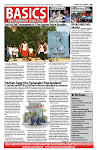.jpg)


 Posts
Posts